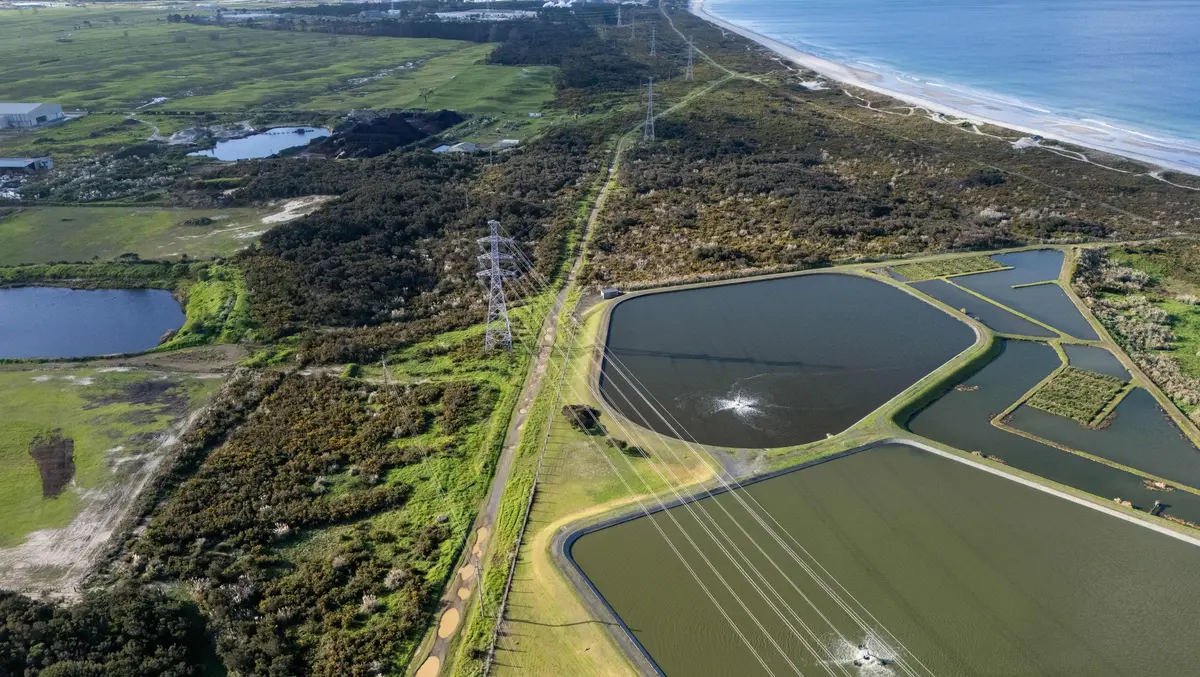
Whangārei council green lights $46m Bream Bay wastewater ocean discharge pipeline
Thu, 26th Nov 2026 (Today)Plans for a controversial Bream Bay ocean discharge pipeline able to carry about 40 Olympic-sized swimming pools of treated wastewater out to sea each day have been given the green light, despite opposition from some mana whenua.
Whangārei District Council on Tuesday (SUBS: 24 November) approved the controversial $46 million Bream Bay wastewater project, which would see the installation of a 3km offshore pipeline capable of discharging up to 100 million litres of treated wastewater into the sea each day.
The already-consented pipeline was endorsed 13:1 as councillors' preferred long-term wastewater disposal solution from the yet-to-be-built new Ruakākā wastewater treatment plant.
Whangārei District Council (WDC) Māori ward councillor Deb Harding cast the lone vote against the proposal, warning the project would affect "the mana of the moana".
Harding, who is also PatuharakekeTe Iwi Trust Board co-chair, said local residents and mana whenua were being asked to carry the impacts of development for the benefit of all.
She said the issue was about construction of the pipeline and destruction of the moana, amid cultural and environmental concerns.
While acknowledging extensive investigations and due process had been undertaken, Harding said that did not mean people would be happy with the outcome in years to come.
Whangārei Mayor Ken Couper said the wastewater would undergo a rigorous treatment process before discharge.
WDC Bream Bay councillor Dave Baldwin said he had initially held reservations about the proposal but now supported it.
Baldwin said he was "very satisfied" the discharge would meet very high quality standards.
Baldwin is a WDC shareholder representative, along with Couper on Tai Tokerau's new Northland Waters company which will take over responsibility for project July.
WDC waters general manager Andrew Carvell told councillors the treated wastewater would exceed standards required by national water regulator Taumata Arowai.
Tuesday's endorsement comes four years after the closure of Marsden Point oil refinery removed a planned industrial use for treated wastewater from the Ruakākā treatment plant, accelerating the need for a long-term disposal solution as growth pressures increase across Bream Bay.
WDC said the outfall is critical infrastructure needed to support major residential, industrial and port-related development planned around Marsden Point and Ruakākā.
Deputy Mayor Scott McKenzie said an extensive resource consent process had been completed, with 110 conditions attached to the project.
"There has been a lot of investigation before the ocean outfall was settled on," he said.
McKenzie said development in Ruakākā was currently constrained by limited wastewater infrastructure.
Two decades of debate
Tuesday's endorsement follows more than 20 years of investigations, planning and debate over how wastewater from one of Northland's fastest-growing areas should ultimately be disposed of.
WDC has held resource consent for the offshore outfall since 2012, following a planning process that began in 2004 and included years of public consultation.
The pipeline was never built because growth occurred more slowly than expected.
Planners anticipated Marsden Point oil refinery would use treated wastewater for industrial purposes, but council documents say the refinery's 2022 closure changed that equation.
"The closure of the refinery, which had proposed to take some of the treated wastewater for process use, has precipitated the need for the upgrade," a council report said.
"The discharge volume that was to be used by the refinery is no longer an avenue for disposal, meaning discharge capacity has been reached earlier than anticipated."
The offshore pipeline is expected to be installed about 4km south of Marsden Point headland.
Following processing at the new Ruakākā treatment plant to remove all solids and disinfect to a high standard, the highly treated wastewater will be discharged 3km offshore at a depth of 8 metres, while the polyethylene pipeline itself will be buried at a depth of 2.5m.
It will run out to sea from the site of the existing Ruakākā treatment plant beneath the dunes and beach, emerging beyond the low-water mark. From there it will continue, buried in a trench and anchored with concrete blocks.
Once installed, it will not be visible to beach users.
Alternatives rejected
WDC councillors endorsed the ocean outfall after a fresh review again rejected alternatives including land disposal, discharge to the Ruakākā River, Whangārei Harbour and Bercich Drain.
A report from Carvell and wastewater manager Simon Charles concluded the consented outfall remained the most certain, resilient and cost-effective option.
Land disposal remained the preferred option of Patuharakeke and many community members, but staff concluded there was insufficient suitable land available to meet long-term disposal requirements.
The only alternative to reach a detailed head-to-head comparative assessment was Bercich Drain in Ruakākā, a man-made channel flowing to the coast near Mair Rd.
While potentially cheaper, staff found Bercich drain carried greater consenting uncertainty, delivery risks and public acceptance concerns because treated wastewater would run out across the beach.
WDC and Northland Waters considered nearly 30 additional concepts, including a shorter one-kilometre outfall and separate wastewater schemes for Waipu and Ruakākā.
None displaced the 3km pipeline.
The outfall is expected to form part of the yet-to-be-built region-scale wastewater scheme centred on the new treatment plant at Rama Rd serving Ruakākā, One Tree Point, Takahiwai and Marsden Point, with possible future integration of Waipu.