Rural lifelines risk being sidelined in transport funding formula - mayors
Thu, 26th Nov 2026 (Today)Wairarapa's vital transport links risk missing out on funding because investment rules favour metropolitan routes over rural lifelines, mayors say.
At Greater Wellington's Regional Transport Committee meeting on Tuesday, South Wairarapa Mayor Fran Wilde and Carterton Mayor Steve Cretney raised concerns that the region's low traffic volumes put it at a permanent disadvantage.
To be included as a priority in the 10-year Regional Land Transport Plan, projects must score well on a benefit-cost ratio (BCR) - a formula heavily driven by daily traffic counts and commuter time savings.
"My problem is the BCR and I know we can't change that ... but the fact is a small population area can never get a high BCR," she said.
"You just cannot do it under this formula ever."
The Regional Land Transport Plan guides regional transport investment and helps inform national funding decisions by NZTA.
In the previous plan, only three of the 39 listed programmes had specific ties to Wairarapa.
Wilde said Wairarapa's strategic transport links were in need of investment but because of relatively low traffic volumes and affected populations, projects were not included in the RLTP as a priority.
"If someone in Wellington was to say the suburb of Karori with 17,000 people now is going to be cut off completely for 'x days' or so many times a year, that would be a major issue for Wellington City," she said.
"We have 50,000 people in Wairarapa.
"We have a bridge just south of Pūkaha on SH2 which is in dire need of replacement and we have a road at the southern end that if there is a large event like an earthquake we will be completely cut off with no fuel supplies."
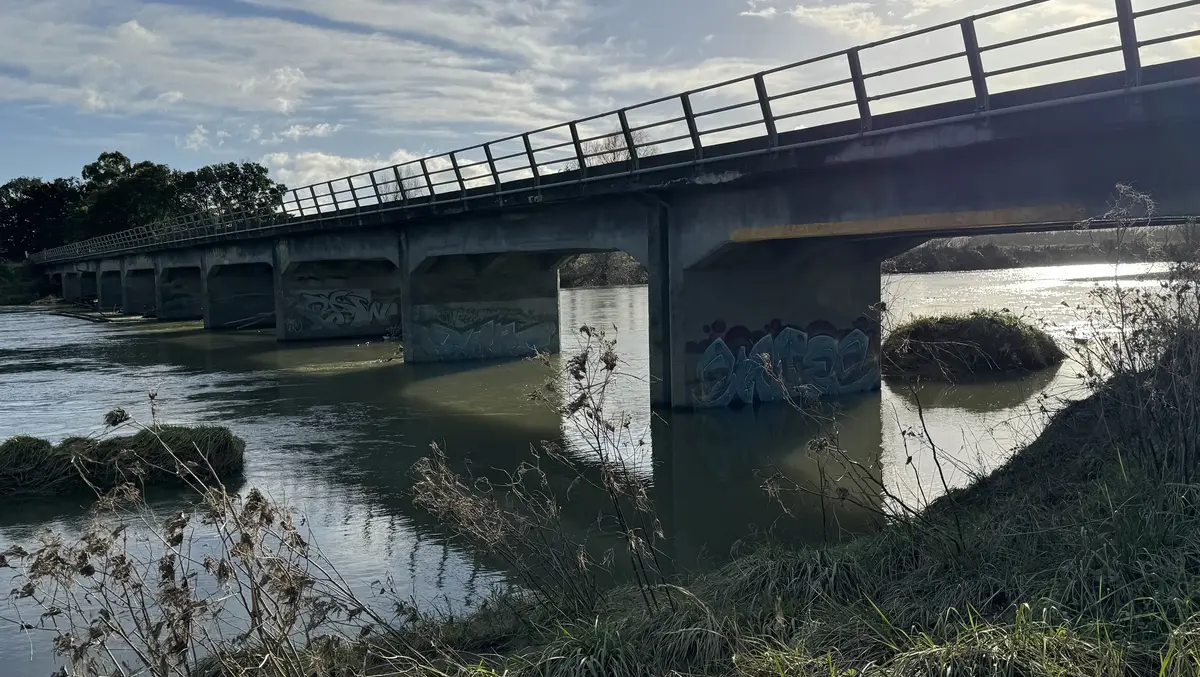
She said the critical routes into Martinborough such as the Waihenga Bridge on SH53 also closed frequently, but "the traffic volume on normal days will never hit the BCR rate."
"It's very frustrating because if you had an equivalent population cut off in a metropolitan area that would be huge.
"But apparently that doesn't matter in a rural area. I just wanted to say that."
Cretney agreed with Wilde.
"I am concerned around the methodology and the fact that rural and interregional projects might be disadvantaged because they fall outside the metropolitan strategic network," he said.
"How will the qualitative benefits be assessed where a traditional BCR does not adequately reflect on the resilience and rural accessibility or consequences of a network failure?"
Under the framework, projects were weighted 50% for regional priority, 20% for regional alignment and sequencing, and 30% for national strategic alignment.
The regional priority portion was based on Greater Wellington Regional Council's transport investment priorities which had a weighting of 30% for public transport, 30% for resilience, 20% for strategic access, and 20% for health, safety, and the environment.
Regional alignment was based on how soon it would be phased into the council's Future Network Plan.
National strategic alignment was based on whether it aligned with the Government Policy Statement on land transport and its BCR.
BCRs indicate whether activities will generate more benefits than they cost, make it possible to compare activities, and enable prioritisation of activities under funding constraints – all within a well-defined framework.
For this reason, they remain the primary measure of economic efficiency used by NZTA when assessing an activity from a purely monetised point of view.