Whakatāne anticipates $1.4 million savings from forming dedicated water entity
Mon, 16th Nov 2026 (Today)An organisation dedicated entirely to water services would save Whakatāne ratepayers $1.4 million over eight years, says Mayor Nandor Tanczos.
The public has one week left to have their say on what sort of organisation they want to provide drinking water, wastewater and stormwater services for Whakatāne district in the future.
Whakatāne District Council's original preferred option was to form a council-controlled organisation (CCO) with Rotorua Lakes, Kawerau and Ōpōtiki district councils, as that had been modelled to create the greatest long-term savings for ratepayers.
However, none of the other councils have indicated they wish to join together at this stage.
While forming a specialist organisation on its own would still have financial advantages, these savings would be modest compared to a multi-CCO due to the smaller scale.
An investigation by consultants, MartinJenkins showed a Whakatāne-owned CCO could achieve about $1 million in capital efficiencies and $400,000 in operating efficiencies by 2034, even after accounting for the estimated costs of around $2.5 million for establishing the CCO.
"There are costs involved in establishing and running a separate organisation, and we've taken those into account," Tanczos said.
"Our analysis shows the benefits of a Whakatāne District Council-owned CCO outweigh those additional costs by a small margin, even if it operates for Whakatāne district alone."
Those financial savings were not the only benefits forming a CCO would bring.
"[The CCO] would give us a dedicated organisation focused entirely on water services, with specialist governance and management, greater financial flexibility and borrowing capacity, while retaining 100 percent local ownership," Tanczos said.
The other option for the council was to deliver water services through an Internal Business Unit.
Due to new Government legislation, a dedicated, ring-fenced water services business unit is being established and will be in place by July next year.
While this will ringfence all finances for water services from other council activities, compared to a CCO, it will have financial constraints limiting investment in necessary infrastructure and limited flexibility if the council choses to join with other councils in future.
"The previous government has made it more difficult and more expensive to keep delivering water services in-house, as we have done in the past. With new restrictions, I'm not even sure that we would be able to deliver what we need to over the next 30 or so years," Tanczos said.
While a multi-CCO is off the table for now, the council also wants to know how the public feel about this option in the future.
Moving from a single-council to a multi-council organisation would not require a further round of public consultation.
It would facilitate working together with other councils in the future.
"That could be structural, through a shared CCO, or it might be with shared procurement and other services," Tanczos said.
"I see it as a stepping stone. We can get the structure right for Whakatāne district now, while continuing to pursue opportunities for greater scale over the longer term."
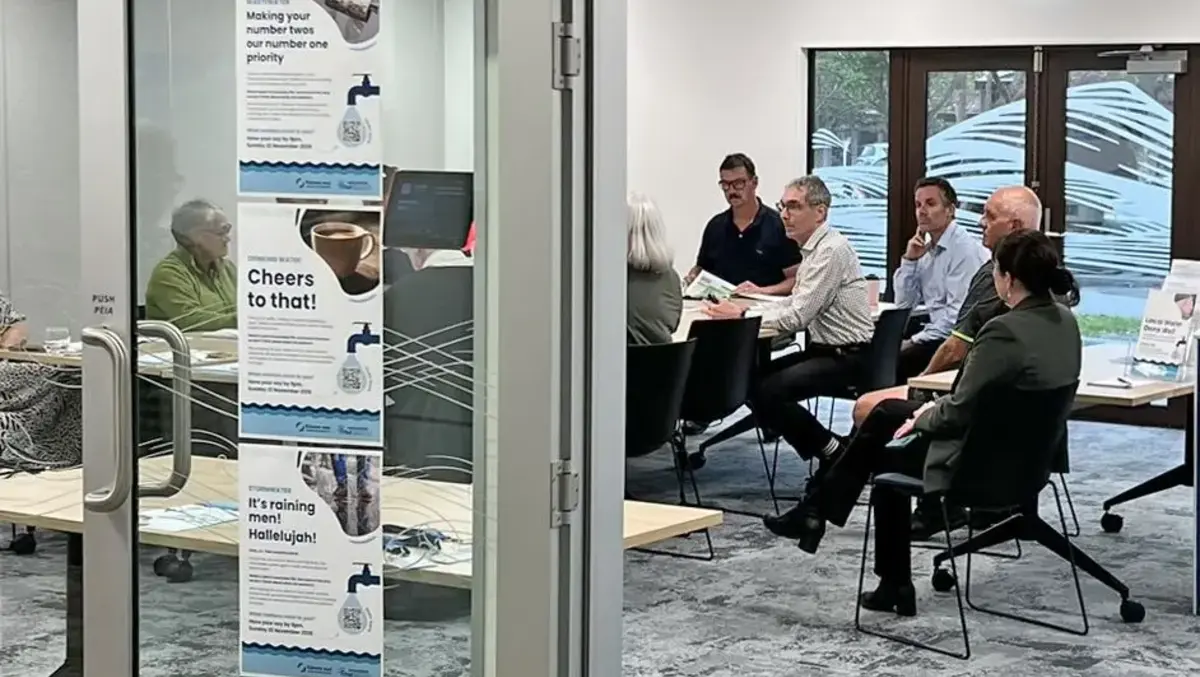
Several public engagement events have been held around the district since consultation opened earlier this month, where concerns were raised that forming a CCO could lead to water services being privatised in future.
"This isn't privatisation," Tanczos said.
The Local Government (Water Services) Act 2025 required water assets to remain in public ownership, so establishing a Council Controlled Organisation did not mean those assets could be sold off to a private company.
Under a single-council CCO, water assets and associated debt would be transferred to the CCO.
The CCO would manage water services on behalf of the council, and the council would be the sole shareholder.
The CCO would be governed and operated independently to council, with its own chief executive and board of directors, but the council would continue to provide oversight and set expectations for how water services were delivered.
"The organisation would remain publicly owned and accountable to the council and the communities it serves," Tanczos said.