

Schneider Electric: Electrifying everything else, flexibly
Wed, 7th Oct 2026
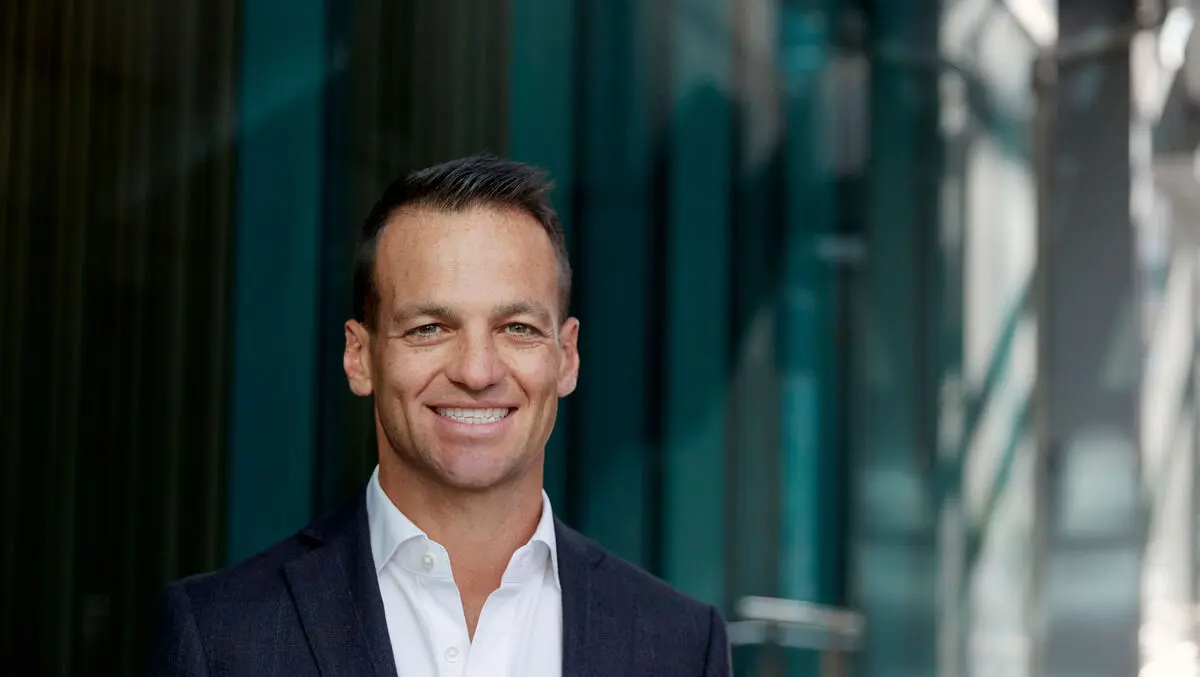
While New Zealand already gets the lion's share of its grid power from renewable sources, most of the country's energy usage as a whole still doesn't come from electricity. Closing that gap represents enormous opportunity, reckons Schneider Electric NZ country president Ollie Hill, who believes the answer should incorporate dispersed private generation and consumption at scale.
"Our electricity is renewable, but our energy system is not. Electricity makes up only about a quarter of the country's energy use, with the rest coming from imported fossil fuels or domestic natural gas."
According to Hill, global data shows that ratio could be reversed using technology that exists today. With gas supplies shrinking, he said the case for electrifying further and faster is strong, and solutions for improved flexibility and security of supply can include microgrids and distributed generation incorporating solar and other sources.
Asked what he sees as the biggest issue in energy today, Hill was unequivocal: "It's the speed of change. That's a massive challenge because it's not just accelerating, but it is exponential growth for an industry that isn't primed for change. There are all these amazing opportunities [for electrification and improved efficiency] but how does the system keep up with it? After all, these are systems that you put in place for 30 to 50 years, they are not like IT where you change everything every two to three years."
At the centre of energy
Schneider Electric, Hill went on to add, sits practically everywhere there is electricity. "We literally touch every part of the economy, because if it takes energy, then we're involved. That's from a light switch in your home, through to the management of an entire energy system in a building or suburb or city, and yes, we do the data centres too. We manage the automation, the software layer, and the advisory services that sit over the top of it."
This positioning, said Hill, places the company well to play a part in enabling the adaptation and flexibility that he says is crucial to long term development. "The biggest crunch point for this industry is getting demand flexibility right, and putting incentives in place that drive the right decisions."
As has always been the case, the problem isn't a shortage of electricity. Instead, the 'new' problem is the same as the 'old' one: uneven demand throughout the day. "Probably 99% of the time there is plenty of capacity in the grid. But the entire system is designed for maybe four hours of the year where demand absolutely peaks…and if you want demand side flexibility, that means being able to turn off some customers at short notice for designated times."
That's one aspect. Another is that electricity consumers, whether data centres or new factories or anything else, are constrained by the consenting and other regulatory processes. In some cases, achieving connectivity to the grid is a major challenge. Elsewhere, there is a shift towards self-provisioning electricity, bypassing the difficulties and limitations of accessing traditional infrastructure. In the United States, for example, Global Energy Monitor estimates that 39 percent of new gas power capacity is being deployed to serve data centres on-site.
The rise of the microgrid
Build-out flexibility, said Hill, is quite possible locally. However, any external power is far more likely to come from solar power than it is from gas turbines or other thermal fuels, though these should not be ruled out. "We ask our customers 'what is an acceptable solution for you?' Then we look at the technology that's available. And we could put in a microgrid and run a battery system, which would let us operate for those four hours."
A microgrid is a self-contained electrical network that can operate either connected to the utility grid or entirely independently. By incorporating distributed energy resources (DER - like on-site solar panels), a microgrid can send excess electricity back to the grid during peak demand.
Hill goes on to explain that a microgrid combines potentially multiple energy sources, generally a battery system, and control software. These privately owned systems deliver energy security at a smaller scale. "Globally, microgrids are a big trend. Yes, often there's a return on investment question, but often it comes down to that need for security. It provides the option, when building something new, of getting a big consumer off the grid at specific high demand times, and then asking what could they add to the grid?"
Scaling up and out
He said these are questions which should be asked. "At the moment, we're not really having those conversations. There's talk of load shedding, but we need to be tackling the energy flexibility issue at mass scale, beyond the very largest users. We need this flexibility across homes and businesses, along with an economic driver where installing a microgrid makes sense for the individual customer, with the end goal of making the whole system work better."
The big idea, he said, is modernising from somewhat static and fixed central systems, to dynamic systems. "Solar plus battery is the default, and sure we all prefer that and hydro but we live in the real world. Some already have diesel generators, and in some cases these sit idle. But in a pinch, if it's going to mean the lights out, then that's an asset. If that asset feeds into the grid, if it contributes to keeping our economy going, then you flick it on."
The very pace of development which is the biggest challenge to the industry, is also what presents opportunity, said Hill. "What excites me most is how relevant our industry is for everybody. People are taking notice of the energy industry, and we're seeing more people wanting to work within it. People understand the value of energy and that it is the foundation for our whole economy. I'm also energised every day at Schneider Electric, being part of an organisation that after 190 years keeps innovating every day."