'Just madness': Franz ratepayers push back on escalating flood protection costs
Thu, 19th Nov 2026 (Today)Franz Josef ratepayers have challenged the West Coast Regional Council over rising flood protection costs, questioning how much of their money is actually making it to riverbank works.
At the Franz Josef Rating District Joint Committee meeting last night, community representatives questioned why thousands of dollars in proposed spending was going into staff time, maintenance and evaluations, with one describing the $26,000 allocated to resource consent and compliance inspections as "just madness".
The joint committee brings together ratepayers from Franz Josef township on the north bank of the Waiho (Waiau) River, and those on the Waiho Flat south bank.
North side representative Grant Gibb asked why ratepayers were expected to approve about $50,000 in staff costs without a detailed breakdown of what the work involved.
"Nearly half of the budget is staff time," Mr Gibb said.
Chief executive Darryl Lew said staff recorded their time on timesheets and providing a task-by-task breakdown would require additional recording by employees.
"I'm mindful that if you want to do this, it actually comes at a cost of time," Mr Lew said.
Mr Gibb said ratepayers were entitled to know what they were paying for.
North side representative Logan Skinner questioned the balance between staff costs and physical maintenance of the Waiho stopbanks.
"We're spending $50,000 on staff time and $34,000 in actual maintenance.
"That ratio in the past was inverse of that. We used to spend far more on works and far less on staff time."
Mr Skinner said budgets appeared to be based on worst-case scenarios when the district already had reserves to deal with major flood events.
"We've got a cost of living crisis, we've got people that are struggling to pay their rates. There seems to be a lot of fat in most of these numbers."
South side representative and farmer Graham Berry questioned the proposed $20,000 vegetation management allocation, following $21,000 spent the previous year.
Mr Berry said substantial work had already been completed and the vegetation was now young and easier to maintain.
"Should be a fifth of that price," he said.
Kelley Molloy, also from the south side, questioned the continued cost of trucking rock from the Whataroa quarry to nourish riverbanks, when suitable rock was already accumulating in the river.
"Those trucks are still roaring from Whataroa to Franz every day, so I think that needs to be looked at.
"I understand you need to replace the rock, but get it out of the river rather than just booking another truck."
Ms Molloy warned that increasing quantities of rock were accumulating in the riverbed.
"It causes the river to build up -- it's like a dam."
The proposed $26,000 for resource consent and compliance inspections, compared with $6080 the previous year, also attracted criticism.
Westland District Mayor Helen Lash asked why the regional council could not provide a defined cost.
"I would think by now we'd have a bit more than a quote and have a defined figure."
South side representative Dale Straight questioned what was actually being monitored.
"The rockwall is there, it's not going to change, it's permanent," he said.
"It's just madness."
Council chairman Colin Smith agreed the inspection programme warranted another look.
"Is that ongoing inspection cost even necessary? It's a prudent time to revisit this issue," Cr Smith said.
Group manager catchment management Michael Beagle said a new asset management system had improved understanding of the condition of stopbanks, deferred maintenance and the level of protection required.
He acknowledged the financial pressure on ratepayers and said the council was reviewing how costs were divided between general and targeted rates.
"We understand people are struggling and we want to see where the costs can be reduced," he said.
The joint committee recommended that maintenance spending be managed cautiously, with value for money and results clearly demonstrated.
It also recommended riverbed-recovered rock become the preferred source for nourishment work and that asset management costs be trimmed where possible, returning towards the preferred $150,000.
The scrutiny comes as the wider flood threat facing Franz Josef intensifies.
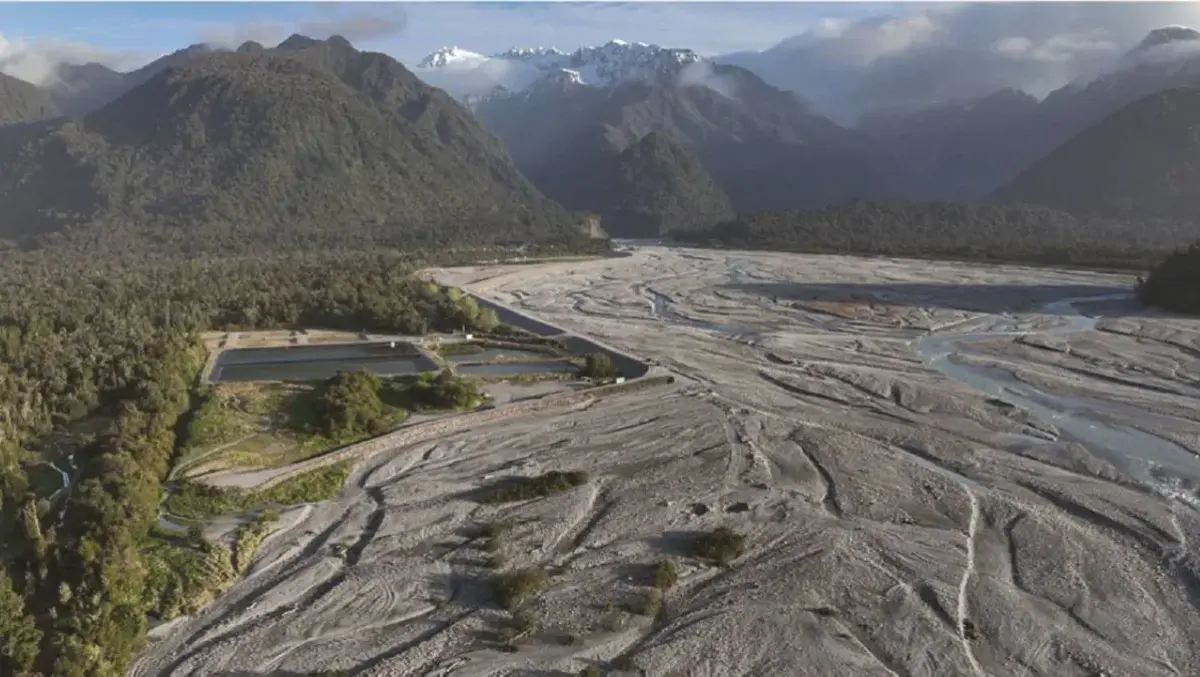
The Waiho River, which carries enormous quantities of sediment from the Southern Alps, has been rising by about 20cm a year near the township.
Since the 1980s, stopbanks have confined the river to about a third of its natural bed, causing gravel to build up instead of spreading. As a result, the riverbed is rising about three times faster than it would naturally.
Members of the independent Waiho Technical Advisory Group recently warned that the rapidly rising riverbed poses an increasing threat to the town and fear a major flood or Alpine Fault earthquake could accelerate sediment movement and put further pressure on flood protection infrastructure.