

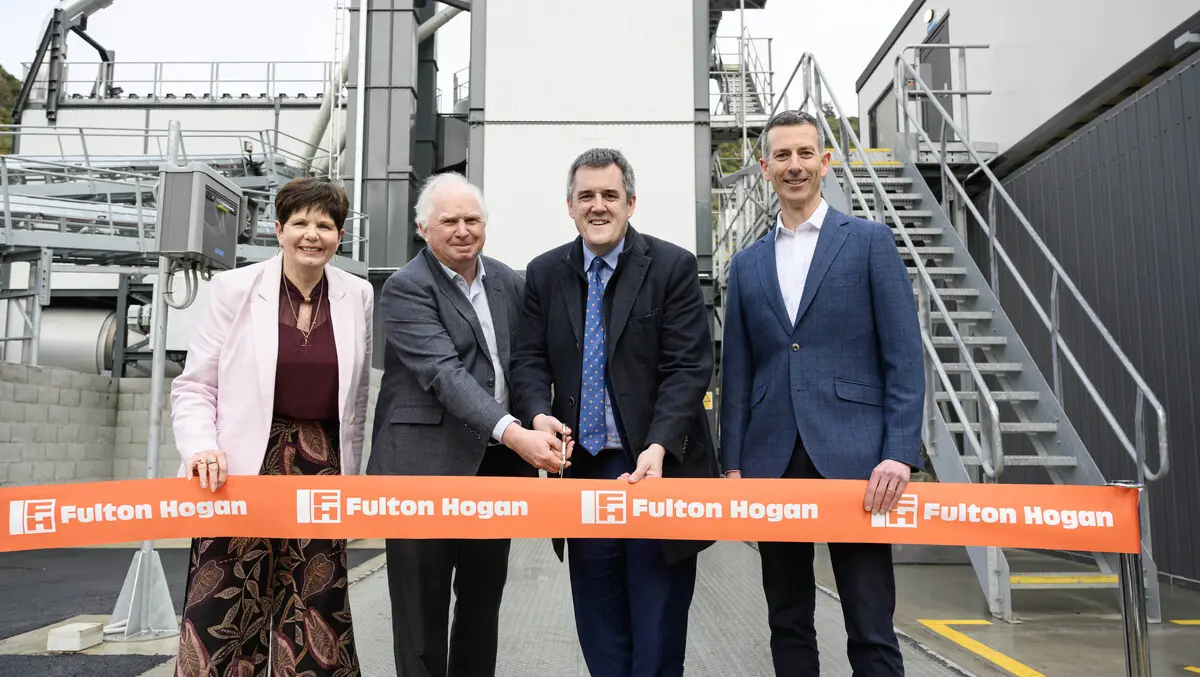
Fulton Hogan opens new asphalt plant in Wellington
Mon, 14th Sep 2026
Fulton Hogan has opened a new asphalt plant in Wellington as part of more than $100 million of investment in asphalt manufacturing across New Zealand.
Located at Horokiwi Quarry, the facility is Fulton Hogan's third new Marini 2500 batch plant commissioned in recent years. The site is about 10 minutes from central Wellington and the Hutt Valley, placing it close to major transport and infrastructure demand in the region.
The plant is designed to lift supply in a market where capacity has been constrained by older facilities. It can produce up to 200 tonnes of asphalt an hour, more than double the output of existing asphalt plants in the Wellington region.
That scale is intended to support large projects across airports, ports, state highways, and other transport and civil works. The opening drew representatives from central and local government, transport agencies, local iwi, and senior executives from the contractor.
The Wellington site includes an integrated Reclaimed Asphalt Pavement system, allowing asphalt mixes to contain up to 40% recycled material taken from roads in the capital each day. By reusing bitumen and aggregates recovered from old asphalt, the plant is expected to reduce demand for newly extracted material and imported bitumen.
Another feature is Reduced Energy Asphalt technology, which produces asphalt at lower temperatures than conventional methods. Fulton Hogan said this reduces fuel use, emissions, and fumes during production.
The facility also includes intelligent control systems and remote diagnostics intended to reduce downtime. It has an expected design life of about 40 years and can be adapted for changing customer requirements, specifications, and new products without interrupting normal production.
The opening extends a broader programme to update Fulton Hogan's asphalt network. Similar facilities have already been commissioned in Drury, Hamilton, and Mount Maunganui as the contractor renews plants that support roadbuilding and other infrastructure work.
New Zealand's transport and civil construction market has faced sustained pressure from maintenance backlogs, resilience work, and large public infrastructure programmes. Against that backdrop, asphalt production capacity and proximity to project sites can affect delivery times, freight costs, and the ability to supply major works at scale.
In Wellington, the location may reduce haul distances to urban projects and improve responsiveness for road maintenance and capital works. Fulton Hogan described the plant as a long-term asset for a region with a concentrated transport network and ongoing demand for renewal.
"This new plant is a significant investment in Wellington and in the infrastructure that keeps the region moving. It gives the region a class-leading, high-capacity asphalt facility that can support major projects, respond more quickly to customer needs and help meet future demand with confidence," said Ben Hayward, Chief Executive Officer, Fulton Hogan New Zealand.
Fulton Hogan also highlighted the balance between higher production and material reuse at the site. Asphalt producers in several markets have been increasing their use of reclaimed pavement as pressure grows to lower input costs and reduce reliance on virgin aggregates and imported binders.
In Wellington, where transport links and urban density can complicate logistics, a centrally located source of asphalt may offer operational advantages for both planned works and reactive maintenance. The plant's ability to incorporate recycled feedstock could also help the company manage supply more efficiently as input markets fluctuate.
"This plant is about more than increased capacity. It is about modern technology delivering both operational and environmental value. By making better use of recycled materials, improving energy efficiency and creating a more flexible production system, we are strengthening the way asphalt is supplied and delivered across the Wellington region," said Hayward.
Fulton Hogan operates across New Zealand, Australia, and the Pacific in roading, quarrying, and civil construction. Its investment in newer asphalt plants suggests it expects steady demand from public and private infrastructure work, particularly in transport networks that require both large resurfacing programmes and routine maintenance.
"Infrastructure plays a vital role in connecting people, supporting economic activity and helping communities flourish. This plant strengthens our ability to deliver for Wellington over the long term and is a practical example of how we are investing in more resilient, efficient and future-ready infrastructure for New Zealand," said Hayward.