Solution for slip-prone West Coast highway edges closer
Fri, 21st Aug 2026
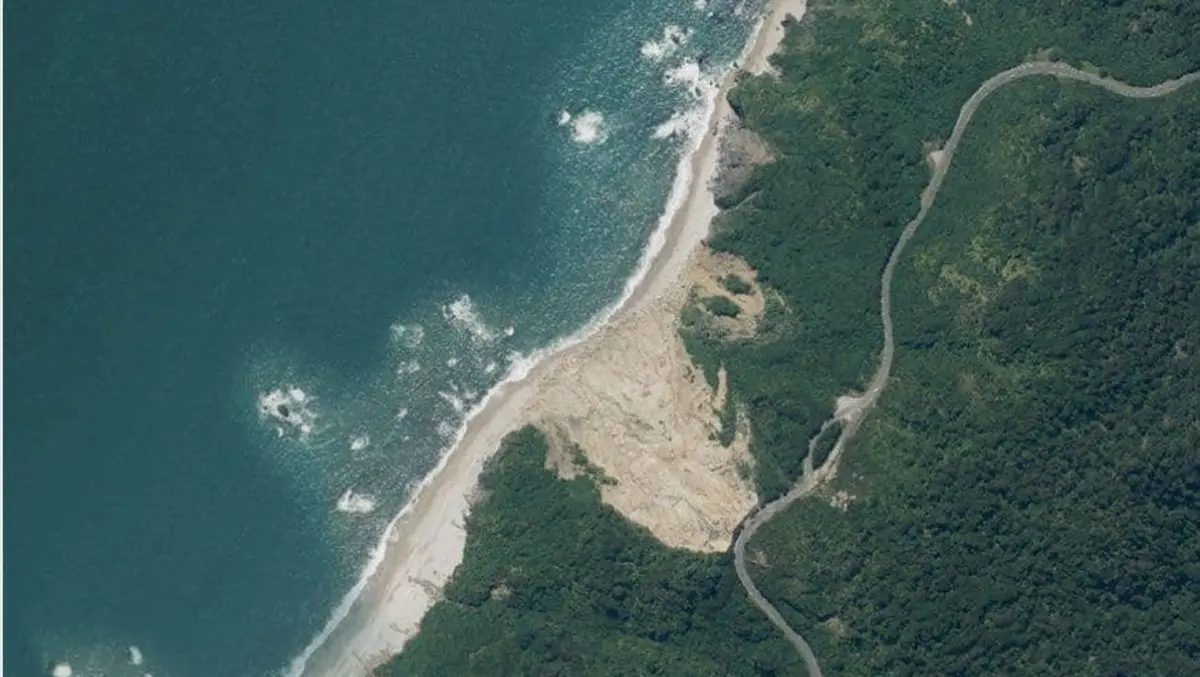
An investment case to find a long-term solution to the Epitaph Slip on State Highway 6 in South Westland has now been completed but work on a permanent realignment could be years away.
Late last year the Government pledged $7 million to complete a detailed design, geotechnical investigations and consenting work for the broader project at Knights Point - which will cost $103m at this stage.
The $7 million approved by the NZ Transport Agency board followed a pledge to investigate moving the road away from a 250m cliff edge as the first step in a larger project to re-align the road slightly inland.
This aimed to ensure a safe and efficient transport link connecting Central Otago and South Westland remains.
The agency has previously described the slip - which falls 250m vertically into the sea below the road - as a ''large'' and ''complex'' landslide.
It has closed the highway on numerous occasions since 2012.
Historical and recent ground movement monitoring data has confirmed the landslide remains active.
The road connecting Haast and Paringa has been called a "strategic freight and tourism corridor" and is nationally important as a connection between the West Coast tourism hotspots of Franz Josef and Fox glaciers, and Wanaka.
The $7million grant nearly 10 months ago was for initial design work and to gain statutory approvals for future construction ahead of a substantial bid to the National Land Transport Plan 2027-2030.
"An investment case to identify a potential long-term solution at Epitaph has now been completed and has recently been endorsed by the NZTA Board," the agency said in a statement yesterday [[Thursday]].
The agency has previously considered bypassing the problematic area altogether, however an alternative route further inland would also pose large-scale technical difficulties.
The agency is now investigating a proposal to step the existing road further back into the hillside behind the slip.
"The recommended approach to strengthen this section of State Highway 6 is to realign the road inland away from the cliff edge, remove unstable material from above the road and benching the rockface to improve stability," a NZTA spokesman said.
"To construct the benches and remove the unstable materials a haul road will need to be built to enable access for disposal purposes."
Completing the initial work under the $7m package was to ensure it is ready for funding consideration for construction within the National Land Transport Plan (2027-30).
"The estimated cost for construction is $102 million."
A rainstorm in 2024 escalated the Knights Point slip with the road left closed for a fortnight.
The NZTA had to use explosives to remove unstable rocks and construct a retaining wall to provide stability, which cost $1.7 million.
And the unreliability of State Highway 6 continues to be a factor in turning tourism and tour operators away from the West Coast in recent years - a worry for the region's leaders.
At the end of 2025 Development West Coast (DWC) said securing that section of road is of huge economic importance for the entire West Coast - after the government committed in November to long-term work at the slip site to secure the route. It would give businesses more certainty, strengthen the tourism network and help protect one of the most important routes, DWC chief executive Heath Milne said.
''When Knights Point closed last year [for rock blasting], the impact was instant. Booking for South Westland businesses dried up overnight,'' Mr Milne said.
''It was estimated that Westland alone lost around $800,000 a day in visitor spending, and the whole region was losing more than $1.6m a day once flow-on effects were included. You can't absorb those kinds of losses for long.
''But the real damage wasn't just the short-term economic hit, it was the reputational impact.
''Inbound tourism operators were questioning whether they could keep the Coast in their itineraries. This despite repair works making the road secure and it being open since."
*