

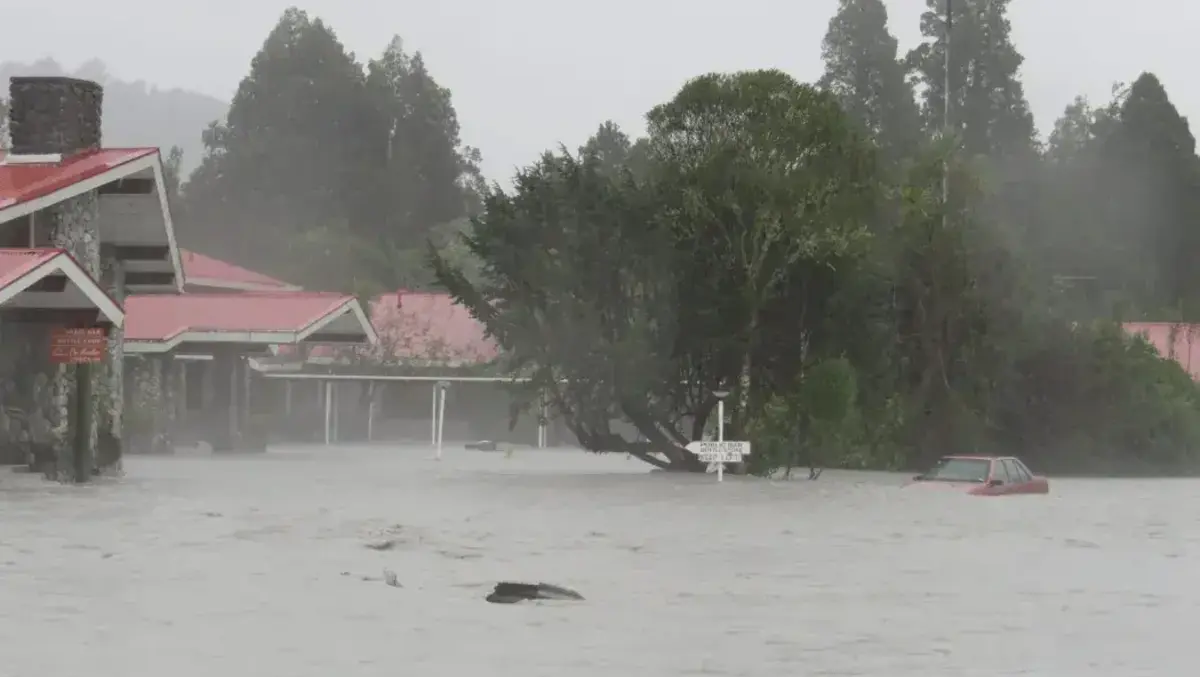
Council drags feet on key plan to safeguard West Coast tourist hotspo
Fri, 9th Oct 2026 (Today)
As the West Coast Regional Council wraps up a multi-million-dollar river protection scheme at Franz Josef, the Westland District Council is three years late making a start on a compulsory master plan for the area.
The master plan was a key aspect of the Waiho River Management Strategy announced in 2023.
Since then, the Government has said any funding to secure the future of the West Coast tourism hotspot is contingent on a master plan led by the district council.
The responsibility was handed to Westland in 2023 after the Waiho Advisory Group for the West Coast Regional Council publicly announced the strategy.
This includes eventually pulling down the stopbanks on the south side of the Waiho (Waiau) -- sacrificing the Waiho Flat farming community and the Franz Josef aerodrome -- to allow the river to fan out naturally.
The 2023 strategy was driven by the increased volatility of the glacier-fed Waiho, fuelled by the dramatic retreat of the glacier, which is leaving crumbling valley walls that end up as gravel that is lifting the height of the riverbed to the point it is now higher than the township.
The idea was to buy time for Franz Josef settlement on the north side.
Moving State Highway 6 from its current southern alignment, and securing other key infrastructure like the power network were also to be addressed in a master plan.
However, since 2023, the Waiho has radically turned to the north with fears now it may eventually flick back towards township and cut off State Highway 6 from the north.
WCRC capital programmes manager Tom Hopkins said this week the stage 2 stopbank upgrades on the south side of the Waiho were officially completed on September 7.
On the north side, maintenance work for the Havill Wall in front of the district council's Franz Josef township sewerage ponds has started.
The north and south projects combined will cost $16 million (stage 1, $11.2m; stage 2, $4.7m) in a co-funding arrangement between the Government and council.
Franz Josef ratepayers have to fund a share of $2.82m in targeted rates and another $810,000 through general rates.
Meantime, the future of the sewerage ponds -- which sit prone on the very edge of the Waiho River bed -- and other key infrastructure has to be addressed.
Government ministers have so far publicly stated no further funding will be considered for Franz Josef until it sees the master plan.
Westland Mayor Helen Lash told Local Democracy Reporting she is forming a committee to address the required plan, with a meeting planned for October 28.
Mrs Lash said she had written to key stakeholders, including the NZ Transport Agency, iwi and the National Emergency Management Agency to formulate the plan.
"We are just getting the responses from everybody and the commitment from everybody at the moment, and then we will get the agenda put together and go from there."
She declined to say what might be discussed or what she hoped the outcome might be.
"Everybody that is going to be at the meeting is acutely aware of the situation ... and what I am wanting to do with this and what I am hoping that we achieve," Mrs Lash said.
An independent chair would be appointed, someone "that can actually direct, manage, control, lead".
"That won't be me. I'm driving it, this is my baby, but I want that independent chair in there."
Franz Josef tourism business owner Logan Skinner, a member of the Franz Josef Rating District Joint Committee, said he supported the new master plan committee.
But funding to ultimately give flesh to the plan was the worry, he said.
"There have been multiple times committees have been formed to come up with master plans for Franz Josef and the ultimate problem is, there is no funding to change anything major."
The Franz Josef Natural Hazards Options Assessment commissioned from Tonkin and Taylor in 2017 recommended shifting the town entirely to the north. This was ultimately rejected by the Government.
Since 2020, the regional council has bolstered work under the Waiho flood protection scheme to mitigate the increasing volatility of the river, with co-funding help from the Government.