


New Zealand's rapidly growing renewable energy base is putting the nation in a strong position to attract data centres, but the increasing demand for electricity will require greater grid resilience, collaboration and better use of existing generation assets, according to ABB.
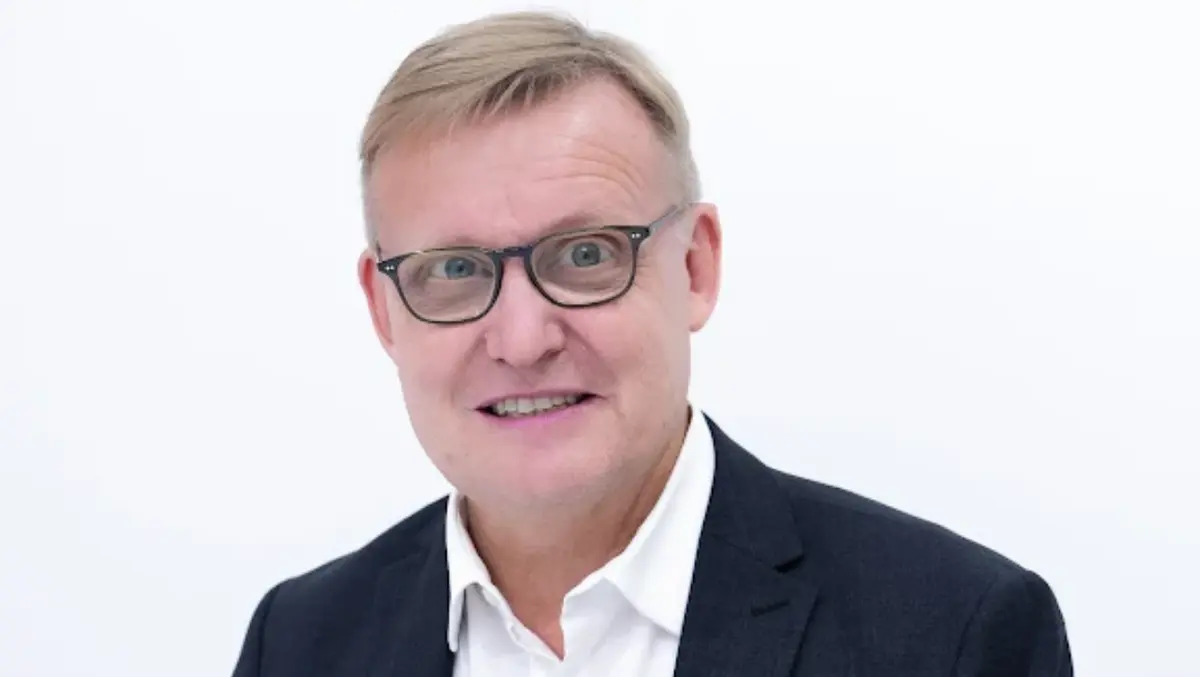
Anders Maltesen, President, Energy Industries Asia at ABB, said recent meetings with New Zealand electricity retailers and generators highlighted a market facing a difficult balancing act between rising demand and an increasingly renewable power mix.
New Zealand has recorded months where more than 95 per cent of its electricity generation has come from renewable sources, up from 85 per cent in 2023.
The increase reflects continued investment by generators and retailers in new wind and solar projects, but the transition is also changing the way the country manages electricity supply.
Recent conditions had demonstrated the challenge, with a period of cold weather driving heating demand, while lack of wind reduced available generation and reserve capacity.
The combination left the electricity system with only approximately 200 megawatts of reserve margin.
"That's obviously a little bit tight," Maltesen said.
Maltesen cited the changing role of thermal generation as renewable energy becomes a larger component of the electricity system.
The Huntly power station, which historically provided a stable source of generation, is increasingly being used as an insurance policy that can be called upon when renewable generation and other available capacity are insufficient.
The challenge is that wind and solar generation cannot be predicted in the same way as traditional thermal generation, leaving the electricity system more vulnerable to fluctuating weather conditions.
Hydro generation provides another important source of flexibility, although it too can be affected by environmental conditions, including water availability.
Against this backdrop, Maltesen said New Zealand should look beyond simply building new generation and consider how much additional capacity can be extracted from existing assets.
Hydro and geothermal facilities, specifically, are likely to remain important parts of the nation's electricity system for decades, creating an opportunity to use digital technologies to improve their efficiency and reliability.
Maltesen said he heard from one energy industry executive whose organisation had used data analysis to identify an additional three to four per cent of power generation capacity within a year.
"I think that was a very good signal," he said.
The approach involves analysing operational data to identify efficiency gains and opportunities to improve the reliability of existing generation assets.
Such improvements could become more important as New Zealand prepares for additional electricity demand from data centres and other energy-intensive industries.
Data centre opportunity for NZ
The growth of artificial intelligence is driving a global expansion in data centre development, with countries competing to attract facilities capable of supporting increasingly power-intensive computing workloads.
New Zealand could participate in that growth, particularly because of its high proportion of renewable electricity.
However, Maltesen cautioned against expecting the country to become a major global data centre hub on the scale of the US.
The availability of renewable electricity is likely to be attractive to data centre operators who are seeking to reduce emissions associated with their power consumption.
New Zealand's challenge will be determining how much additional data centre capacity its electricity system can accommodate, while continuing to supply existing customers and other growing industries.
Maltesen clarified this is not unique to New Zealand, with many nations announcing significant data centre projects as AI investment accelerates.
"If we add them all up, we are likely planning more than we need," he said.
For New Zealand, a balanced approach will be required, instead of attempting to accommodate a disproportionate share of global data centre demand.
Collaboration becomes critical
Meeting rising electricity demand will require cooperation between government, energy companies, grid operators, businesses and academia.
While New Zealand has demonstrated a relatively strong level of dialogue between different parts of the energy sector, collaboration will become even more important as the energy transition accelerates.
Renewable generation projects need to be developed alongside the infrastructure required to connect and integrate them into the electricity grid.
Maltesen pointed to examples in other markets where renewable generation capacity had been added without sufficient grid connection capacity, reducing the practical value of the investment.
"Some markets were adding capacity but no grid connection on renewable power, and then it didn't really help," he said.
New Zealand will also need to contend with a range of challenges that have emerged during previous periods of electricity market pressure, including water and gas constraints.
Despite those issues, ABB remains confident in the country's ability to manage the transition.
Skills shortage drives automation
The energy transition is also creating a skills challenge as renewable generation expands and the existing energy workforce ages.
A shortage of skilled workers is affecting New Zealand, as well as other markets, described by Maltesen as a global issue driven by the rapid expansion of renewable energy, electrification and other changes across the energy sector.
ABB is responding by developing systems designed to allow operators to manage more processes autonomously while retaining human oversight.
AI can be used to analyse operational data and help workers identify faults and determine how to resolve them more quickly.
Remote operation is another potential application, especially for facilities such as hydroelectric power stations located in remote areas.
Rather than requiring large numbers of highly skilled personnel to be physically present at every facility, digital systems can allow operations to be monitored and controlled from a central location.
"People are still needed, but technology can help leverage and reduce the impact of a skills shortage," Maltesen said.
Extending physical infrastructure lifecycle
The ability to modernise existing infrastructure could become as important as constructing new generation capacity.
Hydroelectric facilities were generally designed for long operating lives and could remain in service for many decades with appropriate maintenance and refurbishment.
Some plants can operate for 80 years or more, while geothermal facilities can continue producing electricity as new wells are developed when existing resources become less economical.
Ageing generation assets may also have a role beyond their original purpose.
Older generators could potentially be converted into synchronous condensers, allowing them to provide services that help stabilise a power grid with increasing amounts of renewable generation.
That could provide additional value from assets that might otherwise be considered obsolete.
The combination of new renewable generation, digitalisation, AI and refurbishment could therefore allow New Zealand to increase the amount of electricity available without relying solely on large-scale new construction.