'Tolerable' teething problems to Rotorua's new bins service
Thu, 12th Nov 2026 (Today)Rotorua Lakes Council's food scraps and green waste collection service is tracking close to target after five weeks.
Staff describe teething problems and rollout issues as "tolerable".
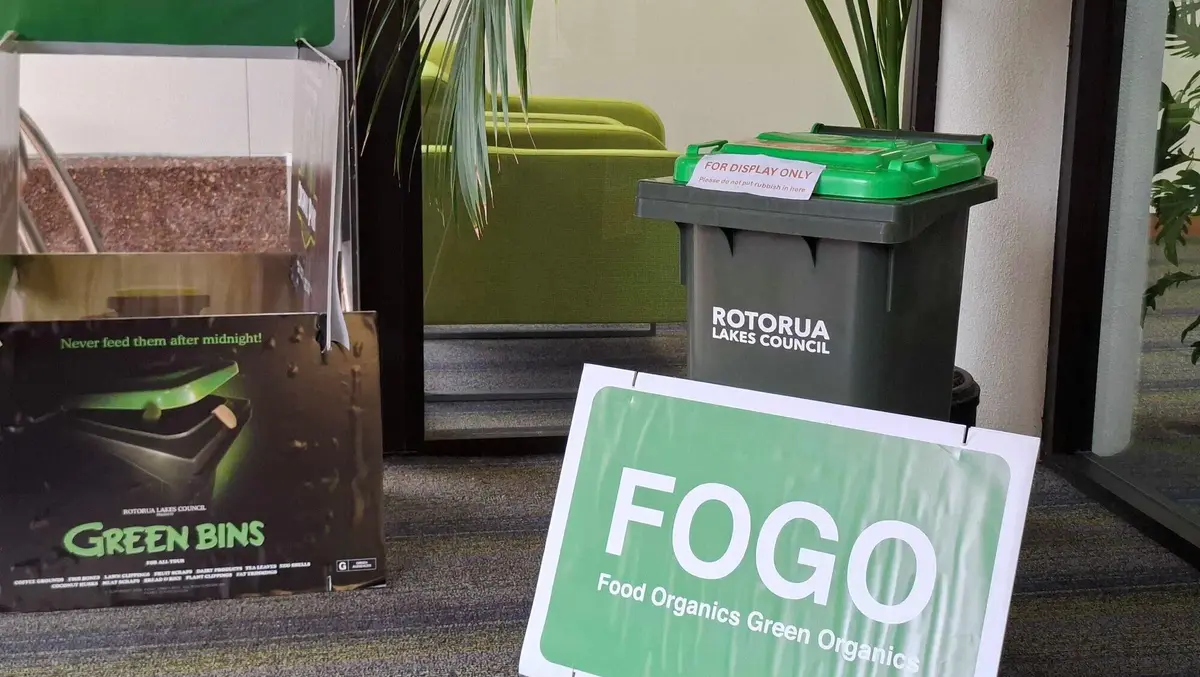
The Food Organics and Garden Organics (FOGO) bin collection programme began in October instead of July 1.
The three-month delay was caused by bin supply issues related to the Iran conflict.
The council's $2.45m-a-year programme aims to minimise waste going to landfill and reduce its waste management carbon footprint, with about 26,000 bins delivered.
It has drawn criticism, with some residents taking to social media to share frustration at not needing extra green waste options and moving to a two-weekly general waste collection schedule.
An update presented to councillors at Wednesday's Infrastructure Committee meeting showed an average of 59.2% of eligible households put their new FOGO bins out for collection during the first five weeks, just shy of the council's 60% to 65% target range.
The amount of material collected is also on track, with households averaging 10kg of organic waste per collection. This is the level anticipated in the programme's business case.
Council infrastructure and assets manager Stavros Michael said the figures represented a "good transition" so far.
"A lot of people I spoke to personally, the feedback is that those initial concerns about their ability to navigate the weekly and fortnightly collections between FOGO, red bins and recycling bins seem to be diminishing."
His team was "quite optimistic" the 60-65% collection target rate "would be easily achieved".
Michael told councillors about 10% of properties were affected by database anomalies that created confusion around collection zones and pick-up dates.
Some households also received incorrect information.
Michael said the council worked with its contractor to correct problems, including collecting missed bins and providing extra information to affected residents.
"If people did not understand the information, we put our hands up and say it must be our problem," he said.
"We went back and talked to the people and did whatever needed to inform people better."
The council received 647 inquiries during the first four weeks, representing about 2.5% of the bins distributed.
Most related to collection schedules, changes to collection arrangements and questions about what could go in the new bins.
"If you consider this is 600-something out of around 26,000, that is a tolerable degree of enquiries."
Councillor Don Paterson questioned whether all inner-city businesses needed FOGO bins, with some producing little organic waste.
"My barber got one. He was like, 'Why have I got this?'."
Michael said businesses had been consulted but acknowledged some adjustments may still be needed.
Paterson also questioned whether some material collected through the FOGO service may previously have been taken directly to green waste facilities rather than diverted from landfill.
Michael said it was too early to conclude and the council would need several more months of data to assess the service's impact.
"The acid test would be to see a reduction in the red bin tonnage that corresponds to the increase in the green collection, but we need a few months to actually calibrate that."
Mayor Tania Tapsell raised residents' concerns about changes to collection times.
She said households used to putting bins out later in the morning were sometimes finding trucks arriving earlier.
"If they missed it because they put it out at 8am and then all of a sudden the truck now comes at 6 or 7am, that's now a month's worth of rubbish."
Michael said council had instructed contractors to return and collect missed bins while residents adjusted to the new schedules.
The committee also heard the council had not observed any increase in illegal dumping since the service began.
Meanwhile, contamination levels in FOGO bins remain low, with the Reporoa processing facility that receives the organic waste providing positive feedback.
The council plans to continue bin inspections and education programmes, including a "three strikes" process for households repeatedly placing wrong material in bins.
"We will now transition from the rollout messaging into ongoing education, encouraging better use of rubbish and recycling bins," Michael said.