Rotorua's costly weed mystery mapped, but Lakefront problem remains
Thu, 15th Oct 2026 (Today)
New modelling has provided the clearest picture yet of how lake weed ends up rotting on Lake Rotorua's shoreline.
Rotorua Lakes Council and Bay of Plenty Regional Council say the findings will help focus control efforts, although tackling the problem remains costly and challenging.
The research, commissioned by Land Information New Zealand (Linz), analysed four weed wash-up events between 2020 and 2025.
Researchers found the wash-ups typically followed prolonged northerly or northeasterly winds and identified the large weed bed, roughly the size of Rotorua's city centre, as a significant contributor to strandings on the city waterfront.
The modelling also found weeds growing from the surface to a depth of about 4m were most vulnerable to wave action during storm events, making them more likely to break free and wash ashore.
Linz biosecurity leader Tracey Burton said the research provided a much clearer understanding of which weed beds contributed to wash-up events and where management efforts could have the greatest benefit.
"We know these events are frustrating for the Rotorua community and can be costly to clean up," Burton said.
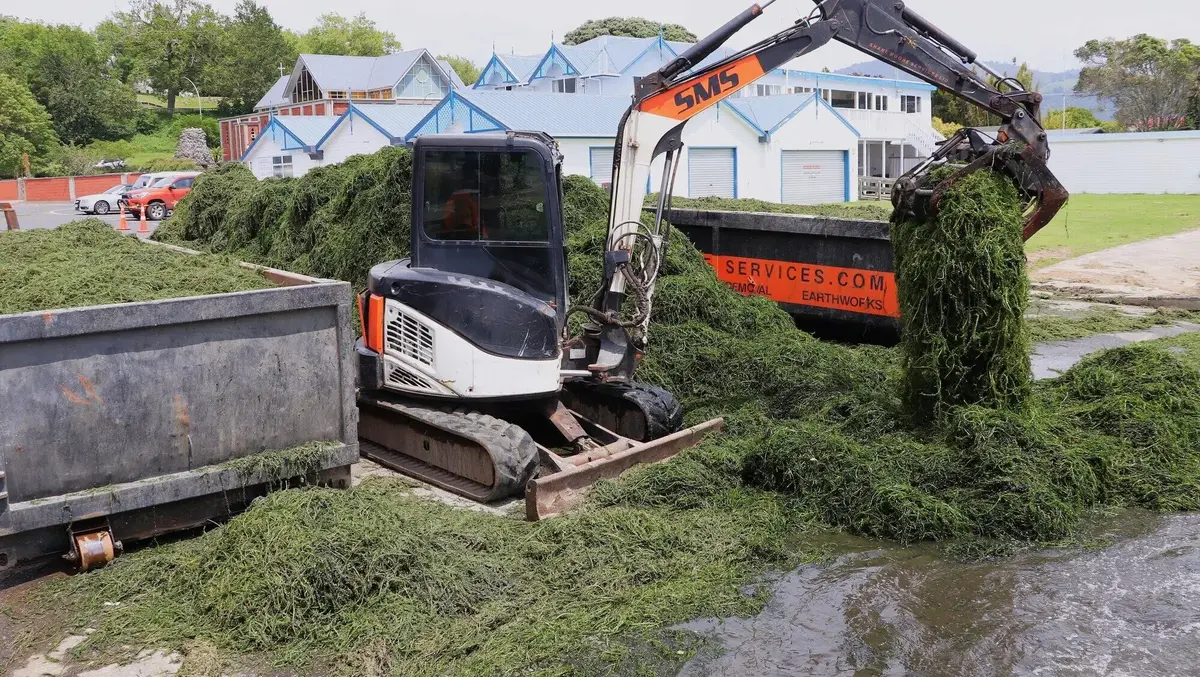
Lake weed has become a recurring problem on the Rotorua Lakefront, with major wash-ups leaving large piles of decaying vegetation along the shoreline and prompting complaints about odour and appearance.
More than 780 tonnes of weed were cleared from the lakefront after a big wash-up last November, at a cost of more than $133,000. This year, a further 135 tonnes were cleaned up, costing about $31,500.
The clean-up costs were split between the two councils. Lake weed management is funded by Linz.
The regional council's biosecurity team leader, Te Wakaunua Te Kurapa, said the findings confirmed what staff had "suspected for some time".
He said the modelling indicated that targeting the shallower, surface-reaching parts of the weed bed could help reduce the amount of weed available to break free and wash ashore.
Te Kurapa said there were, however, still significant challenges.
"The weed beds out front of the city cover a large area, approximately 280 hectares, making any meaningful control very costly."
He said herbicide treatment remained the only practical control tool available at that scale but could only be applied under certain conditions.
"Lake Rotorua is frequently affected by sediment and poor visibility, which can significantly reduce the number of suitable treatment opportunities," he said.
Funding and resourcing would also need to be considered when determining what level of control was practical and achievable, he said.
Rotorua Lakes Council group manager community experience Alex Wilson said the research supported what council staff had observed following summer and autumn storms.
"The modelling gives us greater confidence that lake weed control is being targeted in the areas most likely to contribute to strandings at the Rotorua lakefront."
Wilson said a shared control programme launched in September covered about 200 hectares, including the main problem area south of Kawaha Point, with support from lake protection partners such as Te Arawa Lakes Trust.
She said the research would help inform annual planning but was not a solution on its own.
"Smaller strandings from other weed beds may still occur, and further control measures will be needed to reduce future wash-ups," she said.
"This is important because large strandings can create strong odours, reduce oxygen levels, contribute to fish deaths and affect a lakefront that is highly valued by our community."
Burton said the research would not "solve the problem" on its own but would help identify where management efforts were likely to have the biggest impact. She cautioned that there were limits to what could be achieved.
"Completely eradicating it would require a substantial long-term investment, and there is no guarantee of success," she said.
The findings have been presented to members of the Bay of Plenty Aquatic Pest Co-ordination Group, which includes Linz, Te Arawa Lakes Trust, Rotorua Lakes Council, Bay of Plenty Regional Council, the Department of Conservation and Fish & Game, and will be used to inform future weed-control priorities across the lake.