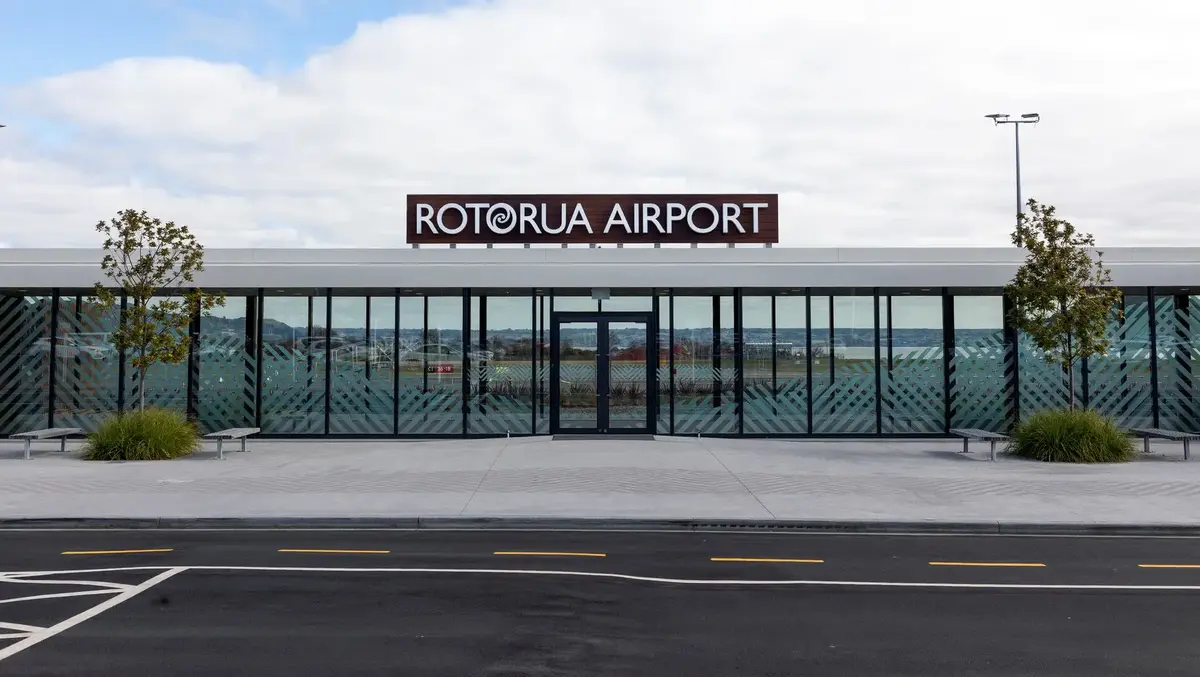
Rotorua Airport's 20-year business park plan might finally take off
Wed, 26th Aug 2026
Rotorua Airport's long-planned business park has moved a step closer to reality.
A resource consent application has been lodged seeking Bay of Plenty Regional Council approval for earthworks across about 5.65 hectares of airport land.
The works would prepare land for future development and improve climate resilience.
Rotorua Airport chief executive Nicole Brewer said the application marked a significant milestone in a project that had been on the airport's radar for two decades.
"Developing a functional, fit-for-purpose airport business park has been a long-term aspiration, and we're excited to take this important step forward," Brewer said.
"We have always viewed Rotorua Airport as more than a transport hub. By connecting people, places and possibilities, we are doing our bit to help our community thrive."
The works would prepare the site for a taxiway connection to the runway area, road access, water, wastewater and other services, and upgrades to the airport's southern aircraft refuelling area.
It also includes stormwater and climate resilience works intended to reduce the risk of flooding.
The wider business park is planned for aviation and airport-related activities, including hangars, training facilities and logistics operations.
Brewer said the development would be "an investment in our region's future".
"Alongside providing high-quality commercial space, the business park will create new jobs and encourage local entrepreneurship," she said.
The airport business park development was estimated to cost $26.7 million when it was identified as one of Rotorua's "shovel-ready" projects in 2020.
An airport spokesperson was not able to give Local Democracy Reporting an updated cost estimate this week, saying the figure was commercially sensitive.
Earthworks are expected to remove about 7322 cubic metres of soil and use about 4744 cubic metres as fill.
Resource consent is required because the scale of the earthworks exceeds limits allowed under regional planning rules and because site investigations identified low concentrations of PFAS, sometimes known as "forever chemicals", and naturally occurring arsenic within parts of the development area.
An airport spokeswoman said the source of the PFAS at the proposed business park site is unknown.
Last week, Te Arawa Lakes Strategy Group warned representatives from both district and regional councils that PFAS contamination was reaching Lake Rotorua. The group called for urgent testing to better understand the extent of the chemicals in the lake environment.
An investigation found PFAS at a historic firefighter training area of the airport - separate to the development site – was linked to the use of firefighting foam.
Early assessments listed in planning documents suggested the contamination levels were low and unlikely to pose significant risks to human health, groundwater, Lake Rotorua or the nearby Ōtauira Wetland if appropriately managed during construction.
Last week, Te Arawa Lakes Strategy Group warned representatives from both district and regional councils that PFAS contamination was reaching Lake Rotorua. The group called for urgent testing to better understand the extent of the chemicals in the lake environment.
Early assessments listed in planning documents suggested the contamination levels were low and unlikely to pose significant risks to human health, groundwater, Lake Rotorua or the nearby Ōtauira Wetland if appropriately managed during construction.
The application includes a site management plan outlining measures to manage soil disturbance, sediment, dust and stormwater during the works, with soil containing PFAS managed by a contaminated land specialist.
Brewer said she was thankful for the "ongoing collaboration and input" from Ngāti Uenukōpako, whose rohe includes the airport area, and that the airport had also worked alongside Rotorua Lakes Council and RotoruaNZ in developing the business park concept.
Rotorua Airport has been a council-controlled organisation since 2008. It is owned by Rotorua Lakes Council and operates independently under a board appointed by the council.
"We aim to create a distinctly Rotorua development that our community can be proud of, including welcoming public spaces that celebrate local iwi history," Brewer said.
Rotorua Mayor Tania Tapsell said the council is "very supportive" of the development.
"This is a great opportunity to make use of underutilised airport land, create new jobs, attract investment and provide room for aviation and airport-related businesses to establish and grow," Tapsell said.
She said it was proactive to "keep investing", and to look at "commercial opportunities", while the council continued to support relevant iwi and mana whenua engagement as part of the process.
The business park development would also require changes along State Highway 30, which the mayor said the council would "advocate strongly" for.
Local Democracy Reporting reported in June that changes had so far stalled, with NZTA saying traffic volumes did not currently justify investment.
Regarding the PFAS contamination, Tapsell said she backed the measures being taken to counteract any negative impact.
"The PFAS levels identified are very low," she said.
"The airport is working with the appropriate consultants and has an appropriate site management plan in place."
If the required approvals are granted, Rotorua Airport expects Stage 1A to be ready for development by mid-2027.