Winter storms leave Masterton council fund in the red
Tue, 22nd Sep 2026
Roading repair bills from severe weather events this winter have pushed Masterton council's storm damage fund into a negative balance of $1.2 million.
The council has signed off on about $3.5m worth of response and recovery works following destructive storms in June and July which brought persistent heavy rain across the district.
Coming on the heels of an already wet year, these were the third and fourth major storm events of 2026.
Masterton District Council's roading services manager Kaine Jaquiery said rain fell on catchments at 100% saturation with no remaining absorption capacity.
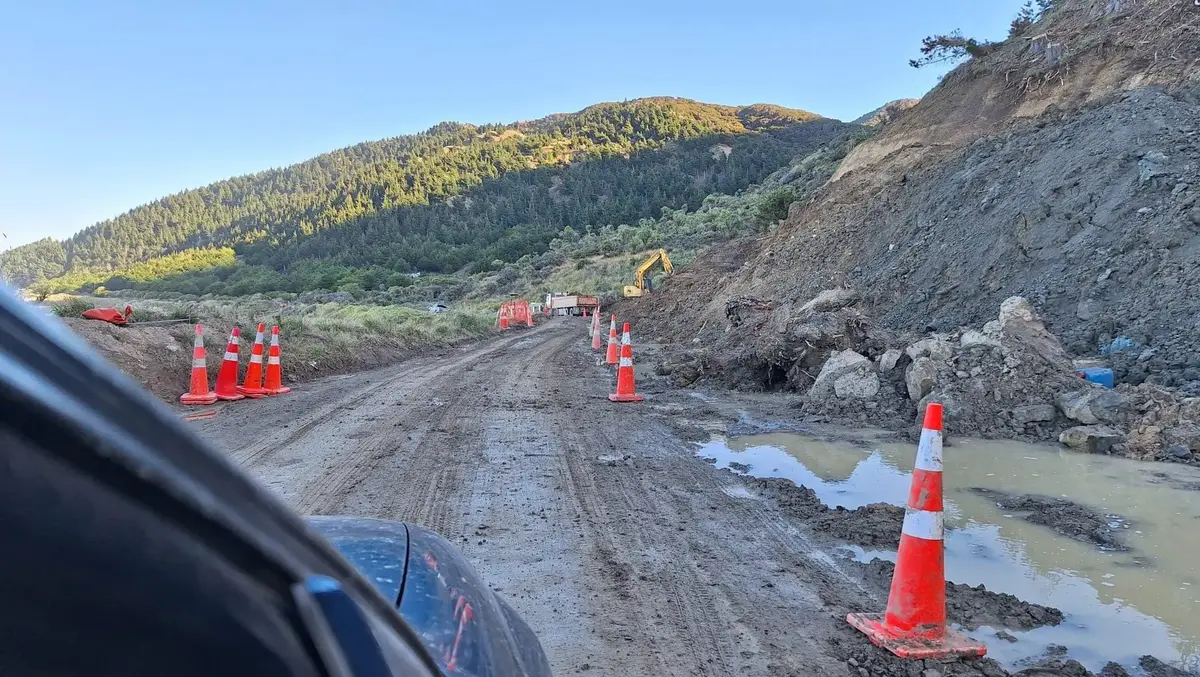
Impacts were felt district-wide and included landslips, road dropouts, drainage failures, and debris across 76 roads in the rural and coastal network, and surface flooding in urban Masterton, Jaquiery said.
Key affected corridors were Masterton-Castlepoint Rd, Whangaehu Valley Rd, Annedale Rd, Wairere Rd, Springhill Rd, Mataikona Rd, Manawa Rd, Daggs Rd, Ngahape Rd, and Te Ore Ore Bideford Rd.
The initial response works, which totalled about $663,000, covered immediate safety and access measures across the network, clearing slips and fallen trees, unblocking drainage, and making safe or temporarily reinstating damaged roads.
A schedule of recovery works, estimated at $2.9m, was greenlit by the council last week.
In total, if all the works were completed before June 30, 2027, the works would receive $2.45m in subsidies from NZTA, leaving the council's share at about $1.15m which would be taken from the storm damage fund.
This fund was topped up by $500,000 from roading rates each year but was now sitting at a negative balance of $1.2m.
Jaquiery's report to council said this pointed to "the need to increase the $500,000" yearly top-up in the 2027-37 Long Term Plan.
He said weather events of this scale were becoming "more frequent and more intense, most likely as a result of a changing climate".
"The cumulative effect of repeated events on an already-saturated network is a growing pressure on both the roading asset and council's emergency works budgets," Jaquiery said in his report.
"This trend is relevant to the longer-term adaptation work underway for the Mataikona Rd corridor, and to future maintenance and renewals planning more generally."
Of the scheduled recovery works, $867,000 would be spent on building resilience on Masterton-Castlepoint Rd, $800,000 on Mataikona Rd at Suicide Point, $500,000 on Mataikona Rd at Middle Settlement, and $301,000 on Ngahape Rd.
Work would also be done on Manawa Rd, Tīnui Valley Rd, Te Mai Road, and other dropouts on Mataikona Rd.
In his report, Jaquiery said the priority was the full reinstatement of Masterton–Castlepoint Rd, "given the risk of isolating the community beyond it", followed by the dropout sites at Ngahape Rd, Manawa Rd, Tīnui Valley Rd and Te Mai Road.
Mataikona Rd also needed extensive repairs, with damage caused at four high-risk sites: two slips in front of Middle Settlement, a road dropout at Suicide Point, and two smaller dropouts on the second hill.
"If not addressed, these sites have a high potential of worsening, severely reducing the level of service or, in the worst case, isolating the community," Jaquiery said.
He said the Suicide Point dropout was the most complex of the four.
"A geotechnical investigation and a further optioneering stage are required before a repair design and a firm cost can be confirmed, and the $800,000 estimate should be treated as indicative until that work is complete."
A Council-facilitated adaptation working group, with members from the community and mana whenua, was looking at the long-term future of Mataikona Rd.
"That work is at an early stage and a forward pathway is not expected for some time, but the repair decision is needed now," Jaquiery said.
"The repair direction and delivery risks will continue to be communicated through the adaptation working group."
Consenting was also a further constraint, as timeframes would be outside the council's control.
Delays could push work into the next financial year which would decrease the NZTA subsidy and increase the council's share.