'Highway robbery': South Island leaders demand fairer transport funding
Fri, 14th Aug 2026
South Islanders are facing ''highway robbery'' when it comes to national transport funding, says Environment Canterbury's (ECan) chairperson.
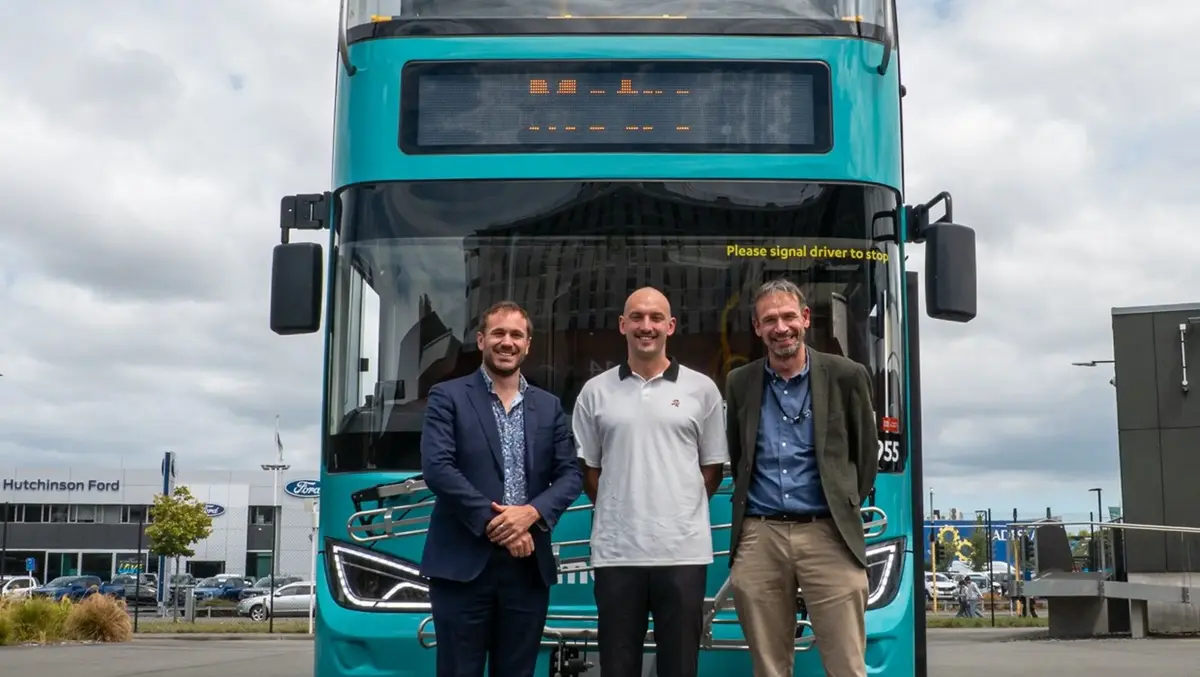
Dr Deon Swiggs was joined by other local government leaders to present a report on the South Island's contribution to the economy to Parliament on Thursday [August 13] .
''The numbers speak for themselves. Whatever way you look at it, there's a bit of highway robbery in terms of the funding which is being generated in the South Island and what is being returned.
''For the first time since World War 2 the South Island is growing faster than the North Island and we are not seeing proportionate investment.''
Dr Swiggs, who also chairs the Canterbury Regional Transport Committee, was joined by regional transport chairs from Nelson, Otago and Southland.
The report found the South Island received just 11 percent of funding from the 2024/27 National Land Transport Programme, despite making up 24% of New Zealand's population.
It also produced 22% of the country's Gross Domestic Product and 33% of export income, attracts 40% of visitor spend and makes up 27% of vehicle kilometres travelled.
The report was commissioned by the South Island Regional Transport Committee Chairs Group.
The transport chairs are calling for political parties to commit to rebalancing the transport budget to invest in the South Island's growth and resilience.
This included funding for public transport, roading, bridges and rail.
''It's right across all activity classes," Dr Swiggs said.
"The South Island has been helping to drive New Zealand's recovery, but for that success to continue, we need a transport network that is resilient, reliable and fit for purpose.
''Investing in the maintenance and long-term performance of the infrastructure we already have is more cost-effective than building new. Prevention is always better than recovery.''
Last week, Southland District Mayor Rob Scott warned the region's extensive roading network faced a "tipping point" due to funding issues.
West Coast regional transport committee chair Peter Ewen also recently revealed he had quit his role after 15 years due to growing frustrations over funding.
Mr Ewen said transportation funding was prioritised in urban areas like Auckland.
In response, an NZTA spokesperson told Local Democracy Reporting that although proposals from the North Island received more funding, the South Island has received a boost in funding in the 2024-2027 National Land Transport Programme.
"Like all public organisations operating in a constrained financial environment, NZTA has to prioritise the funding it has available."
South Island Minister James Meager said he was "deeply aware" of the importance of strategic investment in the mainland's transport infrastructure.
"Investment decisions are based on national priorities, project readiness, and value for money, not a simple regional split.
"The South Island has benefitted from a 42% increase in funding through the 2024-27 NLTP, compared to the previous period under the last Government.
"That is double the percentage increase of the North Island."In the last funding round Nelson, Tasman, and Marlborough received $479 million, the West Coast $255 million, Canterbury: $1.8 billion and Otago/Southland $1.4 billion.
"We've also backed a raft of coastal shipping resilience projects where the benefits will be felt far and wide, and invested more than $150 million in a Budget 2026 package to strengthen some of the South Island's most vital and at-risk state highways," Mr Meager said.
Canterbury hopes to build on public transport
Dr Swiggs said ECan has been working with its Greater Christchurch partners Christchurch, Selwyn and Waimakariri to produce ''a world class'' public transport system.
The regional council committed to its share of the funding in its 2024/34 Long Term Plan, but the Government placed a cap on public transport funding.
Councillors decided earlier this year to boost bus services for Rangiora and Rolleston and add a new service to Aranui, using transport reserves in the annual plan. The council had hoped Kotahi NZ Transport Agency would commit its share, he said.
''We've had an indication the Government will make a decision soon on whether it will fund its share,'' Dr Swiggs said.
''It's expensive for ratepayers to fund it without the investment from Government.''
ECan has begun working on its 2027/37 Long Term Plan and considering the impact on ratepayers if it does not receive Government investment to boost public transport services.