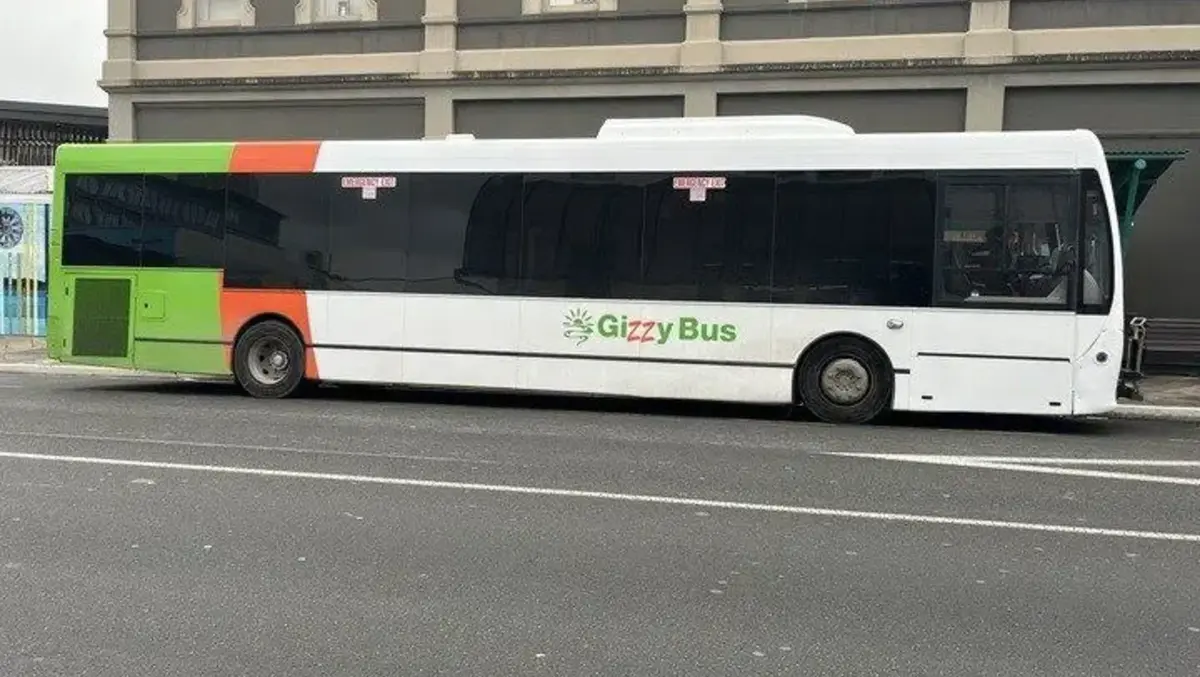
Gisborne bus patronage falls 16% as public transport network faces changes
Thu, 27th Aug 2026Gisborne District Council will review its public transport network after passenger numbers fell by 20,200 in the first six months.
General manager journeys Libby Young said council would review kura services, bus stops and GizzyBus urban routes to identify improvements.
A report presented to Gisborne District Council's regional transport committee last week said the network provided improved coverage and travel times, but passenger numbers decreased by 16%.
Contractor James Llewellyn said the network's financial performance had improved since the new bus contract began in July 2025, partly because of fare increases.
Passengers could use a Bee Card for discounted fares of $1.20 for under 18s, $3 for adults and $3 for SuperGold users during peak travel times.
Youth and SuperGold users recorded the largest decrease in patronage.
Llewellyn said staff were reviewing the Waka Kotahi bus route to determine if student usage could be increased.
"Feedback we often get from some of the principals is that school attendance particularly suffers when there's poor weather, and so if there is a bus that students are able to use that may well encourage more attendance on those days where the weather is inclement," he said.
Some routes, including the Gisborne Girls' High School route, were redesigned to become part of the GizzyBus network.
In a statement following the meeting, Young said community consultation on the regional transport plan reduced the number of dedicated school routes from nine to six.
"GizzyBus saw an additional 5560 trips in 2025/26 compared with the previous year, which may reflect increased use by school students," she said.
A review of the school service will investigate whether route changes, a 20c fare increase or other factors contributed to a decline in school bus use before making further changes.
Council was looking at potential routes for schools outside the existing service, which would require additional buses, drivers and funding.
Staff were also reviewing the causes of the decline in GizzyBus patronage to inform the draft regional public transport plan.
The report identified transfers as one possible deterrent.
Elgin residents travelling about 2km to the hospital, for example, must bus to the city before transferring to a hospital route.
Young said council was working on options for a more direct route, which would be consulted on as part of the regional public transport plan later this year.
"If the preferred option requires additional funding, it would need support from Council and NZTA, with the earliest possible change being later in 2027."
More seating, better timetable information and safer crossings at bus stops could make bus stops more appealing, Young said.
The performance and affordability of individual routes would be assessed, including the new route to Enterprise Cars Swim Centre in Lytton.
"What we want to do is understand whether people are actually using that service that was asked for by the community and therefore whether those sorts of performance metrics can actually be quantified and they certainly can," Llewellyn said.
Councillor Rob Telfer said investigations needed to establish where demand was coming from so routes could better reflect it.
Potential changes would be considered through the regional public transport and land transport plans, including improved access to Three Rivers Medical Centre and Gisborne Hospital, weekend services, and connections to Wainui and Okitu.
While bus patronage declined, subsidised taxi trips increased by about 2480, or 13%.
Councillor Colin Alder asked whether fare increases could be pushing more people towards taxis.
Llewellyn said price and the convenience of door-to-door travel could be contributing factors.
There was an understanding that the bus service was attractive to those with no other transport options, but not for those with access to vehicles, he said.
Online surveys and targeted focus groups could be used to investigate taxi use further, Young said.
The draft regional transport plan would be presented to council on November 5.