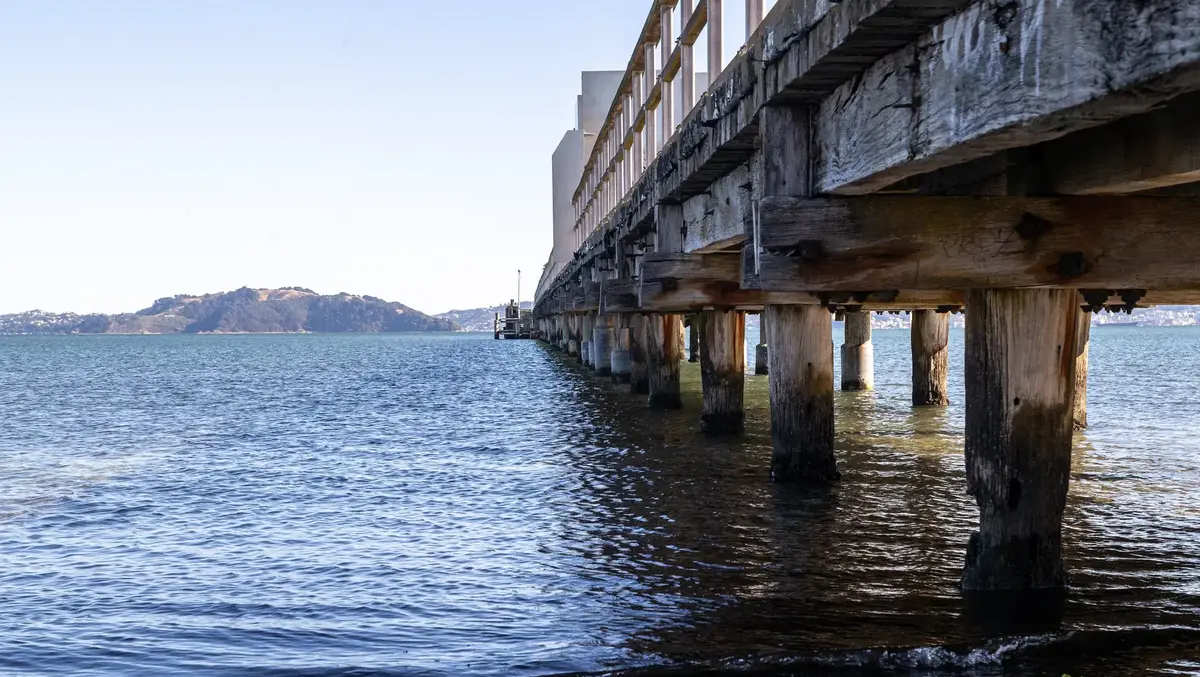
Fixing historic, contentious Petone Wharf one step closer
Fri, 18th Sep 2026
The contract to partially fix up the historic Petone Wharf ‒ which was saved from demolition plans after community protests ‒ has arrived on the desk of the Hutt City Council's chief executive.
Jo Miller told Lower Hutt councillors during a committee meeting on Tuesday that she received the contract for the $11.6 million project the previous afternoon. She was yet to sign it, but said the contractor was the council's regular one for repairing its wharves.
"I want to read it end to end, front to back because spending ratepayers' money is important," Miller said.
A council spokesperson said the council was expected to sign the contract "this week". The council had previously estimated the work would start from mid to late-August.
Last May, the council endorsed the recommendation of an independent study by structural engineer Adam Thornton on the future of the wharf, to knock down nine bays on the wharf head that were in "particularly poor condition" and strengthen the rest.
The wharf has been closed since 2021 because of earthquake and storm damage. The council long-term plan set aside $12m to either repair or demolish the wharf. Strengthening the entire wharf was estimated to cost more than $14m and demolishing it was expected to cost $6m.
The council's proposal in 2024 to knock down the entire wharf was met with a protest and a petition signed by more than 6000 people.
Campaign group Save Petone Wharf had argued any refurbishment could use a new technology called "PileMedic" to strengthen the piles, making it cheaper than traditional approaches.
The repairs are split into two phases: Fixing the first 290 metres of the wharf approach, to replace the damaged structural elements and two seismic gaps to improve earthquake resilience, would happen first.
Work on about 110m of the wharf head would follow, of which 60m could be repaired and the remaining 50m needed to be removed, with the remaining piles to be strengthened and protected.
"The retained wharf structure would also need to be seismically separated into three separate structures with 'gangway' links between them," Thornton's report said. "The intent of the remediation should be that subsequently, no major maintenance should be necessary for the following 25 years."