Carterton's ground too wet, stream too low for wastewater discharge
Thu, 20th Aug 2026
Carterton is grappling with how to dispose of treated wastewater as "increasingly" temperamental weather hits the district.
Critical pumping infrastructure near Carterton's wastewater treatment plant storage reservoirs was affected by flooding in June and July, limiting the council's ability to discharge large volumes of treated wastewater to the Mangatārere Stream.
Since the flooding, rainfall had been insufficient to raise the stream to a high enough level for consented discharge, which was above twice its median flow.
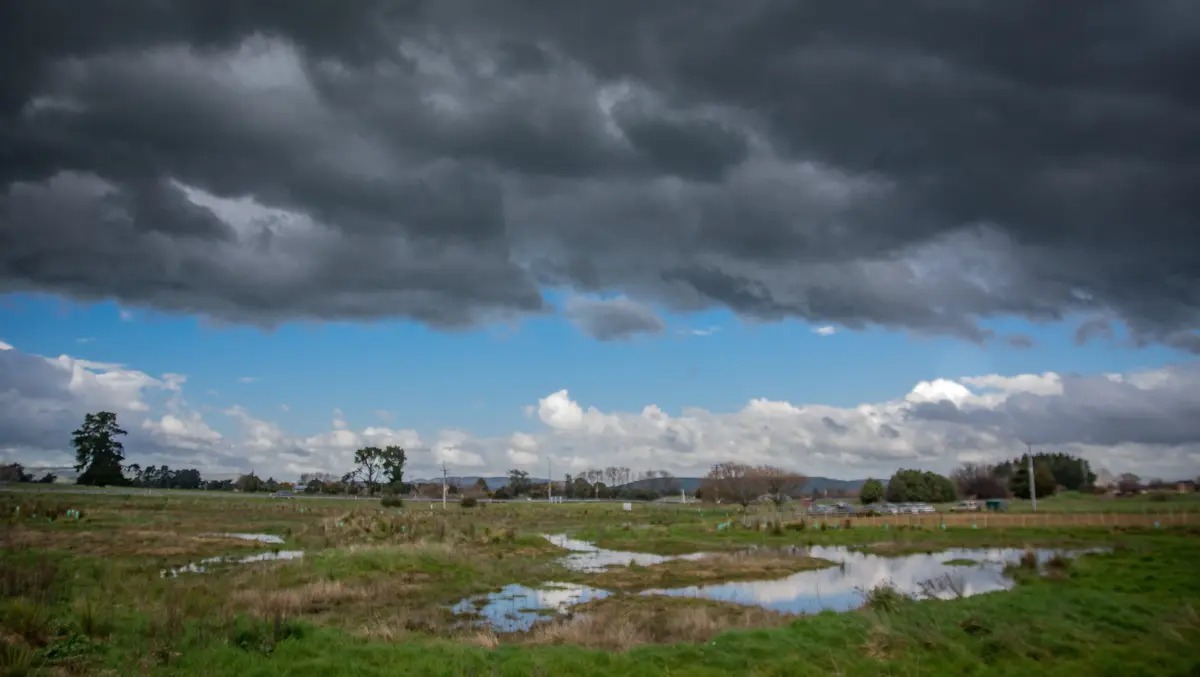
At the same time, cold temperatures, frost, and wet soil conditions had reduced plant uptake and limited the volume that could be safely discharged to land.
A report to the council's Policy and Projects Committee, which was set to meet on Wednesday, said the recent weather had highlighted a vulnerability in the council's discharge system.
In the report, waters compliance and monitoring officer Jeet Kiran said land irrigation alone could not keep pace with current winter inflows, resulting in continued pressure on storage.
"This situation demonstrates the need to improve the resilience of the wastewater treatment plant against increasingly variable weather conditions and reduce reliance on limited winter land-irrigation capacity and unpredictable high river-flow opportunities," Kiran said.
"Carterton District Council is currently discharging under the low-flow consent provisions, which require daily wastewater and river sampling, including weekends, together with macroinvertebrate community index monitoring and reporting.
"This requires additional staff overtime and weekend transport of samples across the Remutaka Hill to the Eurofins laboratory."
Kiran said the associated sampling, laboratory, and ecological monitoring costs were placing significant pressure on the wastewater treatment plant's operational budget and could result in a budget overspend if normal discharge operations did not resume soon.
The council's current consent provides a restricted emergency discharge pathway under specified conditions, including UV treatment requirements.
However, UV treatment does not currently remove the additional approval and monitoring requirements, the report said.
Kiran said the council could investigate installing a validated UV disinfection system before the Mangatārere Stream outfall, to provide an additional treatment barrier and improve resilience during constrained discharge conditions.
"[The council] could also discuss with Greater Wellington Regional Council whether this would support a consent variation providing a more proportionate, risk-based monitoring regime for UV-treated wastewater."
Any variation would require technical and environmental assessment and regional council approval.
In 2014, the council adopted a long-term vision of removing all effluent discharges to water, other than in exceptional circumstances.
The council had since developed Daleton Farm, where treated wastewater was used in the irrigation system.
It also discharged to the Mangatārere Stream during high stream flows, except in rare events when extreme weather conditions overwhelmed on-site storage capacity.
This would continue until an alternative option was implemented.
Part of the council's long-term wastewater management also included continued inflow and infiltration investigations, network condition assessments, and rehabilitation and replacement works.