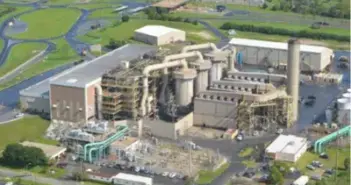
With the average US waste-to-energy facility now 36 years old, well past its design life, managers face a critical question: invest in refurbishment or build new? Continue →
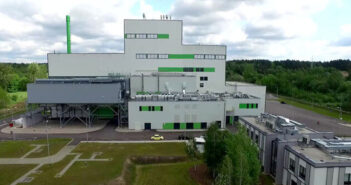
A proposed Kaipara-based $730 million waste to energy incinerator to burn Auckland’s rubbish and produce electricity could be operational by 2028
By Susan Botting, Local Democracy Reporter Northland
“We’re at an exciting point where all the parts are coming together,” Kaipara Mayor Craig Jepson said of the plant – which will also incinerate Northland rubbish. Continue →
VP Head of Global Sales and Marketing at TOMRA, Fabrizio Radice talks to Waste Management World about how deep learning is transforming the waste sorting and recycling processes, the economic and environmental benefits of smart waste management solutions and how it will shape the industry
1) Can you provide an overview of how smart solutions are transforming waste sorting and recycling processes compared to traditional methods? Continue →
Gasification is the most widespread alternative to conventional waste incineration, however it has not yet been implemented on a large scale, with the one major exception of Japan
The objections to gasification have not changed since the technology was invented: too expensive, too maintenance-intensive, not efficient enough in comparison with conventional incineration. Continue →
Changes as part of the waste levy expansion programme are an important part of reducing the amount of rubbish ending up in landfill, the Ministry for the Environment says
The waste levy expansion programme introduced last year will help support New Zealand’s efforts to transition to a low-carbon economy where waste is minimal. Continue →
Polystyrene’s typically high level of contamination makes it hard to recycle, but recycling companies around the world are proving it can be done with new innovations, Waste Management World reports
Plastics are one of the biggest challenges for the waste management industry. Continue →
Construction and demolition waste poses a special challenge for recyclers – it comprises a lot of different tough materials and it is difficult to separate pollutants, Waste Management World reports. Continue →
Aluminium plays an important protective role in food packaging, however it requires a lot of energy to produce and it can be difficult to recycle
The crucial discovery has been made by Jiaying Li, who is working with the Dutch Advanced Research Center Chemical Building Blocks Consortium (ARC CBBC), in collaboration with the University of Twente, Wageningen University, BASF and AkzoNobel. Continue →
As China faces rapidly mounting volumes of waste, it intends to have digitally monitored intelligent waste collection sites bring about an increase in the currently low recycling rate
For a good 20 years, China has tried to increase its recycling rate, with only modest success so far. Continue →
New Zealand lags far behind in recognising that high temperature waste incineration can provide efficient and clean energy, plus it comes with the added bonus of destroying pathogens and viruses in the process with minimal effect on the environment
The latest acceptance comes with the European Environment Minister’s recognition of waste management as a sector providing an essential service at the launch of a guidance publication on waste shipment in a Covid-19 environment. Continue →
The beeswax-melting digestive system of a pest caterpillar could hold the secret to solving plastic pollution
Eric Betz – Discover
Each year, humanity churns out some 300 million tons of plastic and ships it around the world before dropping it into landfills. Continue →
Robots are performing complex quality control tasks at waste management facilities that are usually done by humans, with surprising results
This article first appeared on Business Insider
Only a small fraction of the garbage the world produces each year gets recycled – about 16% – and that number has gotten even smaller in the past year. Continue →
With its 2016 acquisition of plastics recycler mtm plastics, Borealis, an Austrian chemicals and plastics group, took a big step towards a circular business model. Continue →
A self-contained onsite farm waste solution, which uses a combination of biogas from anaerobic digestion and solar power, has been launched by Bioplex and Controllis, a global supplier of DC generator technology and hybrid energy power solutions
Bioplex is a UK based AD technology firm which has uses a pre-digester for the processing of farm and horse stable manures, claim that the hybrid system could not only reduce or eliminate electricity costs but even provide profits. Continue →
Ditch the “Fire-Ready-Aim” mentality and find a unified voice for Energy from Waste
In a recent report, The Role of Energy from Waste in a Circular Economy: Creating a stable project structure, the Australian Industrial Ecology Network (AIEN) says that the implementation of Energy from Waste (EfW) in Australia should be streamlined in accordance with a nationally developed policy framework. Continue →
Food left out to fester is a known target for flies, bugs and creepy crawlies, but their insatiable appetite for waste food is actually now being harnessed as a solution for the greater good
Tom Freyburg – Waste Management World
The idea of eating bugs might be the stuff of nightmares for the squeamish with sensitive palates, but it’s becoming a big business. Continue →
Lower energy costs, a reduced fossil fuel environmental footprint and cleaner wastewater effluent are just some of the benefits NH Foods Australia are seeing at their Oakey Beef Exports facility from the technology involved in the far-sighted green energy initiative
The Global Water & Energy (GWE) COHRAL™ (Covered High-Rate Anerobic Lagoon) plant involved was installed at Oakey by Australian environmental engineering and green energy authority CST Wastewater Solutions, which recently inspected the plant as it reaches its landmark fifth year of service in southern Queensland. Continue →
Eco-friendly governor Jay Inslee signed legislation making Washington the first US state to approve composting as an alternative to burying or cremating human remains, according to an Associated Press report
Ben Messenger – Waste Management World
Under the new law that will go into effect in May of next year, people who die in the state will have the option to have their bodies transformed into soil suitable for use in gardening in a process called recomposition. Continue →