Mobility-as-a-Service (MaaS) stories
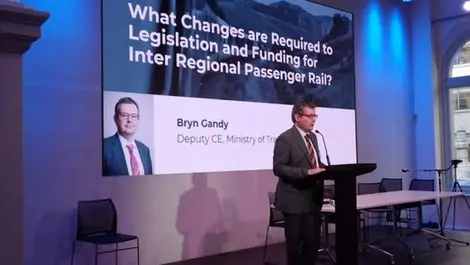
Passenger rail could cut emissions and widen access, but chronic underinvestment and patchy national coordination still hold New Zealand back.
Passengers across New Zealand will eventually tap cards and mobile wallets on buses, trains and ferries, but the rollout is not due until 2026.
Public road trials and taxi ranks could make electric vehicle charging faster, cheaper and less disruptive for drivers.
Spark expands Mobility-as-a-Service offering to enterprise customers, providing flexible device management solutions for remote work.
Global cooperation and heavy state intervention would favour low-carbon infrastructure, while fossil-fuel projects and greenfield builds are marginalised.
Approval of the Orbit plan could see Innisfil grow from 37,000 people to 150,000 while limiting sprawl and preserving farmland.
Passengers could soon book flying taxi trials in Melbourne or Sydney, as Uber prepares to name its first international test city on Monday.
Micromobility could ease urban congestion, but cities still face safety, regulation and infrastructure gaps as e-bikes and e-scooters spread.
Singapore has been chosen for Volocopter’s first urban flight trials, as the German startup builds local engineering capacity and test infrastructure.
Rapid7's Q1 2025 report reveals stolen credentials without MFA cause 56% of breaches, while manufacturing faces the highest threat from ransomware attacks.
Researchers reveal a method to bypass MFA and hijack cloud sessions by stealing browser cookies, threatening access to Microsoft 365, Google Workspace and AWS.
A new MaaS platform, Supercard X, exploits Android NFC tech allowing cybercriminals to swiftly steal funds, raising urgent security concerns, especially in Asia.
Alibaba Cloud has been named a leader in AI by Forrester and Gartner, solidifying its role in cloud computing and advancing AI technology on a global scale.
Darktrace reveals 56% of phishing emails bypass security checks. The latest report underscores the persistence of cyber threats and the increasing need for adaptive defences.
Fortinet's latest report reveals a surge in cyber threats aimed at the Paris 2024 Olympics, with attacks increasing from 212 million at London 2012 to 4.4 billion for Tokyo 2020.
Juniper Research launches entry submission for the 2024 Future Digital Awards for Smart Cities and IoT Innovation, aimed at highlighting tech organisations pushing boundaries in connected, sustainable development.
Cybersecurity firm Darktrace reports a major shift in cybercrime, with increasing reliance on 'as-a-service' tools like Malware-as-a-Service and Ransomware-as-a-Service,.
Enzoic CTO, Mike Wilson, forecasts key 2024 cybersecurity trends, underscoring API attacks and automation needs.
This growth of 74% over the next four years will be driven by carrier billing expanding beyond content and into physical goods and ticketing.
Sebastian Krüger joins us today to discuss how unified infrastructure monitoring enables MSPs to seamlessly deliver services to their clients.