Decarbonisation stories
Reduced livestock numbers and wetter weather helped drive a 2 per cent fall in New Zealand’s gross greenhouse gas emissions in 2023.
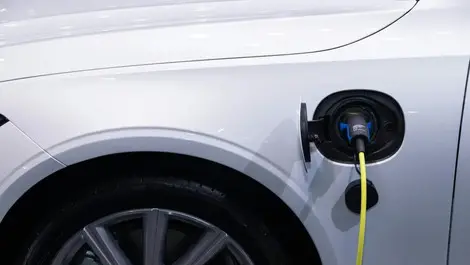
EVs are linked to higher CO2 output in 26 countries, with the researchers saying only grids powered by far more renewables will cut emissions.
Secondary rail lines across New Zealand face slower maintenance and more speed restrictions under KiwiRail’s latest plan, alarming South Island operators.
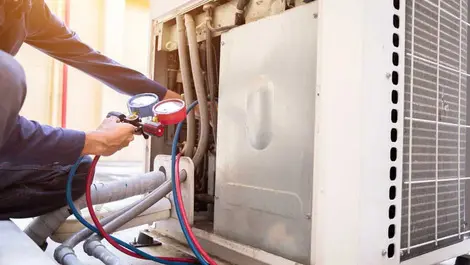
IoT sensors and machine learning can trim cooling demand, helping building operators cut bills and emissions without costly retrofits.
Zevero launches ESG Disclosure AI to speed up reporting by 40%, boosting accuracy and simplifying processes for businesses' sustainability disclosures.
Five startups from Switzerland, Dublin, Canada, and the UK win ABB's 2025 Startup Challenge, each receiving USD $30,000 to develop AI energy solutions.
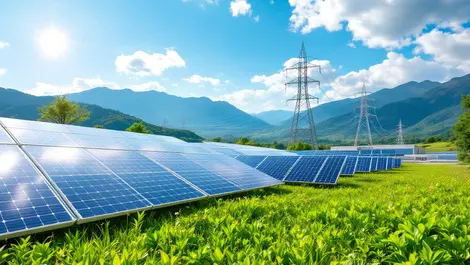
Equinix has signed its inaugural renewable energy Power Purchase Agreement in Japan, securing 30 MW of capacity from a solar project in Hokkaido.
Schneider Electric has unveiled the winners of its 2025 Pacific Sustainability Impact Awards, honouring leaders in renewable energy and water management.
Equinix has successfully issued SGD $500 million in green bonds in Singapore, marking a significant move towards sustainability as it supports energy-efficient projects.
Motion Ventures has unveiled its largest maritime technology fund yet, pledging USD $100 million to foster innovation and sustainability in the maritime sector.
Held at Marina Bay Sands in September, the expo is expected to draw thousands of professionals seeking deals, contacts and CPD points.
Schneider Electric has secured top honours in Canalys' Global Sustainable Ecosystems Leadership Matrix for the second year running, highlighting its sustainability commitments.
Verne is cutting carbon emissions by up to 90% at its London data centre by switching backup generators from diesel to Hydrotreated Vegetable Oil (HVO).
Samp's CEO, Laurent Bourgouin, is calling on the industrial sector to embrace Shared Reality, an innovative AI-driven 3D workspace to modernise operations.
Gridsight has secured $7.5 million in Series A funding to enhance its AI-powered software, aiding energy operators in navigating Australia's energy transition.
A new report reveals that Japan, South Korea, and Taiwan offer lucrative opportunities for UK firms in the sustainability technology sector as they tackle decarbonisation.
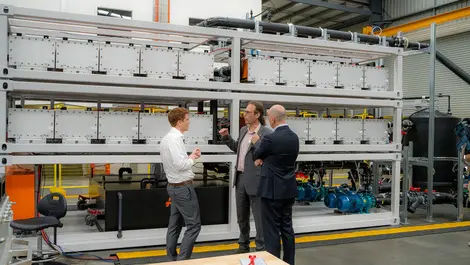
Allegro Energy has launched Australia's first locally made microemulsion flow battery, marking a significant milestone in long-duration energy storage technology.
Schneider Electric has appointed Pablo Ruiz Escribano as Senior Vice President for its Secure Power and Data Centre Business in Europe, effective immediately.
Honeywell is set to launch a Centre of Excellence in Singapore to deploy AI and machine learning, aiding decarbonisation efforts in Southeast Asia.
Brett Martin has unveiled eco-friendly polycarbonate sheets, promising carbon savings of up to 97% for data centres, crucial for reducing embodied carbon.