'They vote with their feet': Dam backer says businesses leaving region over lack of water
Thu, 15th Oct 2026 (Today)
Hawke's Bay businesses are "voting with their feet" and leaving the region because of fears about water security, a man behind one of two large proposed dams in the region says.
Xan Harding, chair of the Heretaunga Water Storage Project, has welcomed the National Party's pledge to commit $300 million in loans to water storage projects, including in Hawke's Bay, if elected in November.
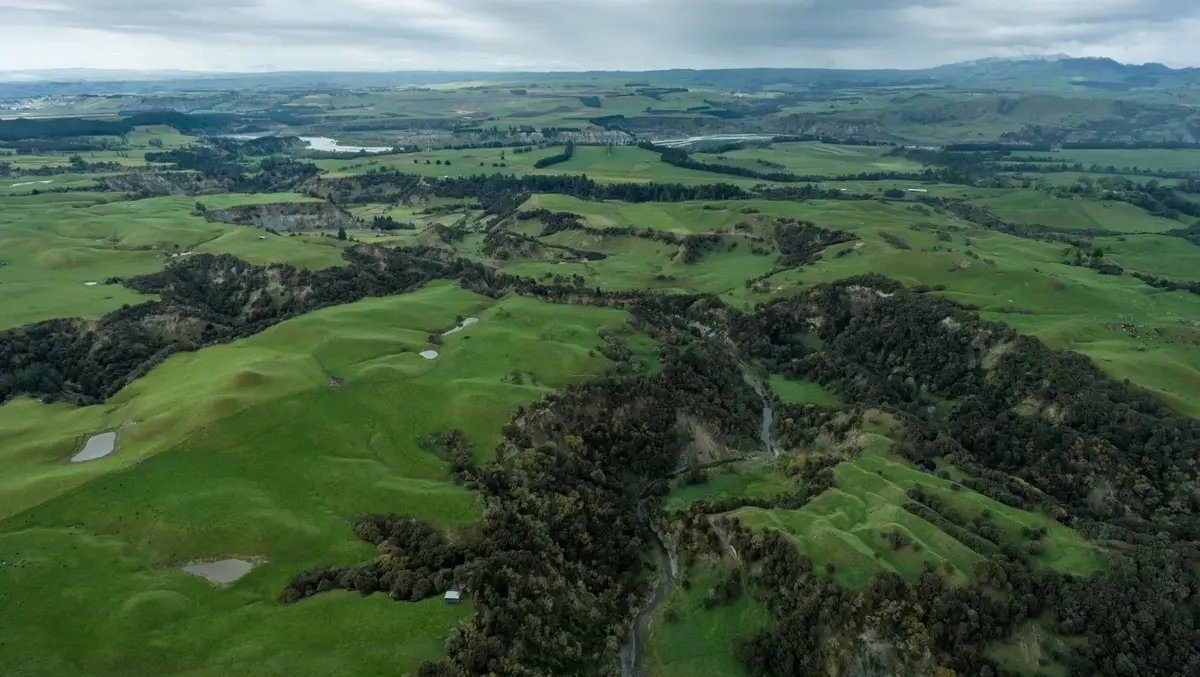
Harding's group is proposing a 27 billion-litre reservoir near Whanawhana, on a tributary of the Ngaruroro River, to capture high winter flows and release water during drier summer months.
Dams in Hawke's Bay are a controversial topic and have been an ongoing debate since the Ruataniwha dam was mooted by Hawke's Bay Regional Council in 2008.
It became highly controversial because of concerns about the scheme's economic viability, the potential for more intensive farming, worsening freshwater pollution, and the proposed exchange of protected conservation land to enable construction.
It was abandoned in 2017 after the Supreme Court ruled against the conservation-land exchange.
Harding said the Heretaunga Water Storage Project's aim was to improve water security across the Heretaunga Plains, supporting growers and businesses while helping replenish groundwater and sustain lowland river and stream flows.
"It's a social, environmental and economic solution using the natural infrastructure, the aquifer and streams to actually be the conveyance," Harding said.
He said there was no doubt primary production remained the foundation of the economy and the key to future economic prosperity.
"We must protect and grow our agricultural economy while safeguarding our waterways and natural environment.
"Water security is now critical to enabling reliable production of the food the world needs and to adapting to a changing climate with more frequent weather extremes."
He said growers had the choice to go elsewhere.
"And they do. They vote with their feet, and you don't often see that.
"It's just that corrosive, but it's actually happening all the time, which is dragging us down and backward."
The Tukituki Water Security Project is also proposing a large-scale water storage dam on the Makaroro River in Central Hawke's Bay. Both projects are pushing to use fast-track legislation to get underway.
Announcing the policy on October 9, National's agriculture spokesperson Todd McClay said water was one of the country's greatest strategic and natural advantages.
In response to a Hawke's Bay Today editorial about National's loans this week, Tukituki Water Security Project chair Mike Petersen said the region's vast river network sends over seven billion cubic metres of water to the sea each year, even in dry years.
"Storing less than 2% of that has to be part of a bundle of solutions for our region's water security," Petersen said.
He said there were no guarantees a dam would be viable, and they had never claimed otherwise.
"That is why our project is being tested step by step, in the open, and will only proceed if it stacks up. The real gamble is doing nothing," he said.
"Hawke's Bay faces a freshwater shortfall, and we've watched processing plants close and growers rethink what they plant. Whatever comes next needs reliable water."
Forest & Bird's regional conservation manager for Hawke's Bay, Chantal Pagel, said water security must not come at the expense of healthy rivers, wetlands, native species or public conservation land.
"New Zealanders value and depend on these places for recreation, cultural connection, wildlife, and clean water. Any investment in water storage must deliver genuine environmental sustainability and strengthen, not weaken, protections for nature," Pagel said.
She said there was a risk changes could allow "damaging projects" under the current fast-track legislation to bypass environmental safeguards, putting freshwater ecosystems and the communities connected to them at risk.
Federated Farmers Hawke's Bay president Anthea Yule said capturing water when it was plentiful, for use when it's not, was a strategic enabler for economic growth.
"On our farms it means we can lift food and fibre production, and it offers flexibility to shift to higher value land use. That in turn locks in improved supply and a better future for our meat works and other processing plants."
She said the changing climate was making water supply security more critical and that secure water storage in Hawke's Bay would encourage new investment in industries and jobs.
Tukituki candidates in the November general election agreed that water security is critical for Hawke's Bay, but differ on how to achieve it.
Incumbent Catherine Wedd, of National, said she had been a strong advocate for water storage in Hawke's Bay, "so this is progress for our region".
"We need it to unleash the potential of Hawke's Bay," Wedd said.
She said climate change was real and water storage was not just important now, but for generations to come.
NZ First candidate Taine Randell said that while he supported water storage, he was "unsure if dams were the right way to go about it".
Opportunity Party candidate Rachel Ward said there were big challenges with water security in Hawke's Bay.
"Opportunity's Healthy Land and Water policy was released several weeks ago, which outlines our support for smarter water use and storage, including embedding rainwater harvesting in the Building Code and incentivising and streamlining consents for novel on-farm water storage that also acts as a hub for native biodiversity."
She said "it appears National agree with this approach," but the devil is in the detail.
Labour candidate Dan Scott said having reliable water was essential for Hawke's Bay.
"Labour would prefer an approach that co-ordinates water storage through the National Infrastructure Plan," Scott said.
He said it would support a proactive approach to water security and help regions like Hawke's Bay build the resilience they need.
Act Party candidate Rob Douglas said water security was critical to Hawke's Bay, and Act strongly supported getting more water storage projects underway.
"However, before committing $300 million of taxpayers' money, we need to get the regulatory settings right.
"Too many projects are bogged down in costly and drawn-out consenting processes, with millions spent on consultants, lawyers and hearings before construction even begins."
He said Act's priority was to remove regulatory barriers and provide the certainty needed to encourage private investment.