South Waikato visitors asked to reconsider trip to Te Waihou/Blue Spring over long weekend
Tue, 20th Oct 2026 (Today)
Two South Waikato councillors are calling for one of the district's top tourist destinations to close while its financial viability is assessed.
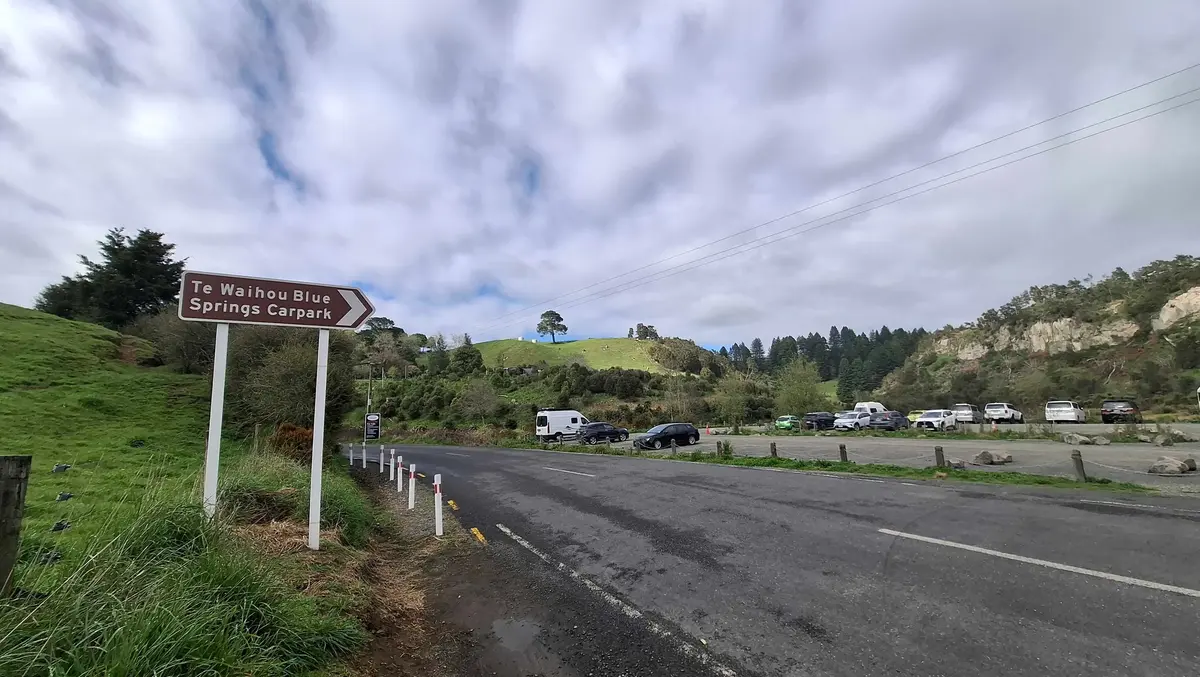
South Waikato District Council is asking people not to visit Blue Spring (Te Waihou Walkway) over Labour weekend, to ease pressure on the popular tourist destination.
"Those planning a trip to the site between Friday 23 - Monday 26 October are asked to instead consider visiting at an alternative and less busy time," South Waikato District Council said in a statement.
"There will be lengthy delays on the road and to access parking ... With limited room to park, turn and manoeuvre on Leslie Rd, buses and large vehicles are asked to avoid the area during this period, for the safety of everyone."
As the council still expects an influx of visitors, it will deploy traffic management Saturday to Monday from 8am to 7pm each day.
There will also be a 30km/hr speed restriction on either side of the Leslie Rd carpark, as well as additional toilet facilities and rubbish bins at the carpark.
A council spokesperson told Local Democracy Reporting they had budgeted $20,000 for these measures.
However, Tīrau councillor Kerry Purdy and Putāruru councillor Zed Latinovic said these measures were not enough and they wanted the spring closed until a long-term solution was found.
'How many more $20k weekends'
Purdy and Latinovic said the spring had become a burden on ratepayers.
Last year, the spring reopened after the council spent $2.1 million rebuilding a walkway and making it safer for the public.
The council also spent $41,806 on waste management and toilets in the 2025 financial year.
Purdy said putting up traffic management to manage the "onslaught" of visitors was unsustainable.
"How many more $20k weekends are we going to have?" Purdy said.
"We keep putting band-aids over a festering sore."
Latinovic said he supported a closure of the spring.
"We have to close the Blue Spring and say, 'Look, we are closing it today, and it's going to be open next year with a full system in place," Latinovic said.
Taonga v tourism
Local iwi Ngāti Raukawa regard Te Waihou as a taonga, a treasure of great significance.
The Waihou River was a pathway and food source for their ancestors and formed the northern boundary of their tribe, according to the council website.
Earlier this year, Raukawa spokespeople joined the mayor in asking people to respect Te Waihou by refraining from polluting the area.
Visitors have also mistreated the area, with the council reporting toilets being clogged due to being stuffed with rubbish, coins being tossed in the water and dangerous parking.
In September, the Government announced it had allocated $675k from its International Visitors Levy to help combat these issues.
A council spokesperson confirmed it was still working with Raukawa to create a sustainability plan for the springs.
The allocated funds from the government levy would pay for that plan.
Latinovic welcomed the funds, but said the commercial viability of the springs needed to be assessed.
He suggested the council should charge entry for it.
"We have to think about things when we call it an attraction," he said.
"The only way to find out what real interest and how big of an attraction it is, [sic] it's only going to be shown when you start charging for access to it."
Latinovic and Purdy said the majority of tourists visited the spring but not anywhere else in South Waikato.
This meant despite pouring millions of dollars into the spring, the council and local businesses saw little, if any, return, they said.
Purdy recalled meeting a woman travelling from Auckland to Rotorua.
According to Purdy, the woman said she paid the coachline an extra $20 to see the spring, then jumped back on the bus to continue straight to Rotorua.
"As a ratepayer ... I'm paying for that walkway to be open," Purdy said.
"I'm helping to pay for the maintenance and the facilities. Yet that money is not coming back to the district."
One idea being touted to address this issue is a park-and-ride facility, where visitors would park near Tīrau township and pay to catch a ride to the springs.
Latinovic supported a park-and-ride, but said a proper facility would need to be built.
Purdy also said she supported the service as long as it was well-planned out, sustainable and cost-effective.
Failure or work in progress?
Overall, Latinovic said the ongoing situation at Te Waihou was a result of council failure.
"We don't have tourism attractions [in South Waikato] so our council is not familiar with [managing something like] that," he said.
Latinovic wanted the council to look at lessons learned from neighbouring tourist locations such as Rotorua and Taupō.
South Waikato mayor Gary Petley said while things had moved slower than he would have liked, the council was determined to work with every stakeholder to get it right.
"That means things take time," Petley said.
"In recent times our council has invested in other key infrastructure projects, and the reality is we can't do everything at once."