Revisiting zombie towns: Balclutha's rural resilience
Tue, 29th Sep 2026
A decade ago I called Whanganui a zombie town. It was slowly losing people, jobs and prospects, and seemingly no one was doing anything about it. Then it went from exporting people to importing them. What did I miss?
I went back to provincial New Zealand to find out. I also wanted to find an antidote to the polarisation that is wrecking our communities and politics.
The term infuriated many. Steve Hill, chief executive of the Clutha District Council, remembers it well. "We were pissed off, right? And it was a challenge to us: how could we prove that term wrong."
He does smile wryly when he says this. In person, people are less outraged and keener to explain why their town is special, why there are things people are trying, and that some things are working.
In my defence, I hadn't named Balclutha. I was describing megatrends that were hollowing out economic opportunities in many places: globalisation, urbanisation, technological change, ageing and climate change. People, especially the young, were voting with their feet.
I was frustrated by a lack of action. Central government had no regional lens. And locally I saw little co-ordinated action to avert the hollowing out, despite businesses, homes and infrastructure that should have meant real opportunities to be harnessed.
The megatrends are still there and intensifying. Whanganui has grown, but not every town has.
So I looked at two places. Tokoroa in South Waikato is living through forestry mill closures now. Balclutha in South Otago has regained its mojo and grown for the past decade, after three decades of hollowing out.
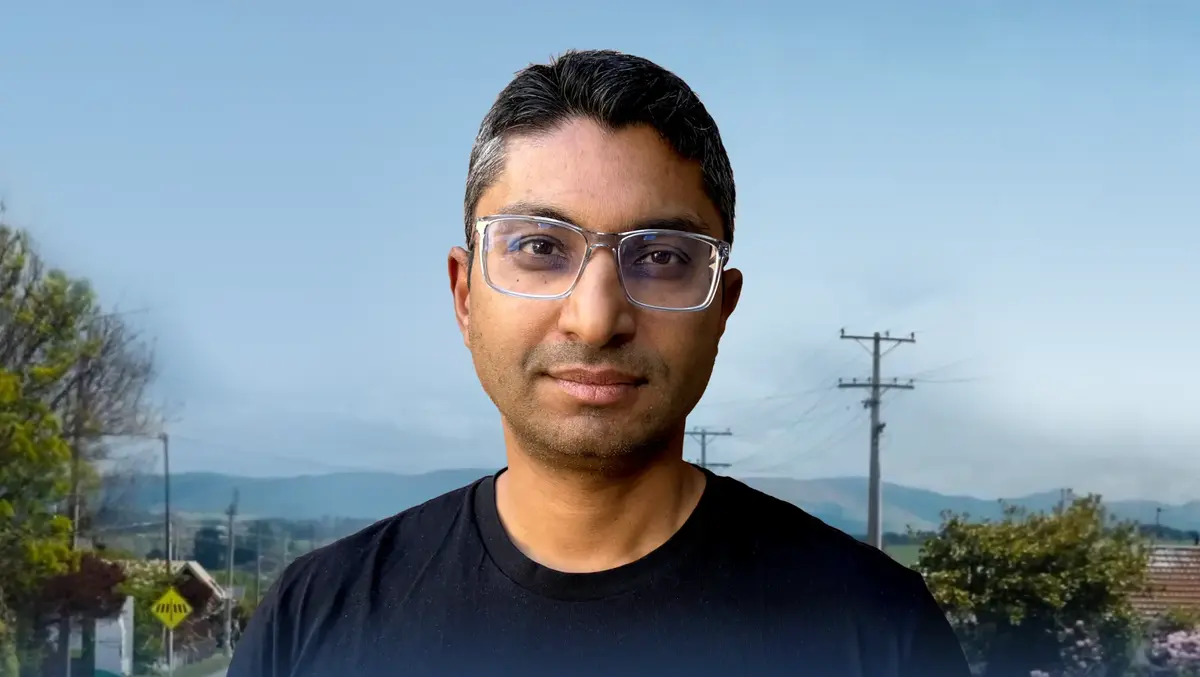
We see economist Shamubeel Eaqub in front of a background depicting a road in a rural area of New Zealand. The yellow text above him reads: "Zombie Towns." The yellow text below him reads: "Everything I missed."
I can see it in the data. In the 1970s Tokoroa was rich, with average incomes 40 per cent above the national average. Today they are 15 per cent below. Balclutha grew in the 1970s, hollowed out from the mid-1980s, and turned about a decade ago.
But I had the data already. This project was about the human stories. There is a connection to place that is not easily captured in economics.
People have roots, connections and hope. It was surprisingly easy to collect the stories. People wanted to be seen, heard and acknowledged.
While I was filming in Balclutha, Nigel Stirling, an ex-RNZ economics correspondent who interviewed me many times, pulled up in his ute. He is back on the family farm.
"This is not a zombie town now," he told me. He is right.
He reckons it's dairy prices and Auckland house prices. Is that true? And what lessons for other places? I found it was much more than Nigel suggested, and the magic sauce is messy, complicated and local.
Bryan Cadogan, mayor of Clutha for 15 years until last year, tells me how the district was gutted by Rogernomics 40 years ago, economically and socially. "It was brutal, and it happened fast." Family farms went.
The kids had a saying: Clutha sucks, I'm out of here. They don't say it anymore. What changed, in Bryan's telling, was that the district looked at what it already had.
"We had extremely low section prices, low house prices, and being rural we had an enormous number of jobs. Fifteen years ago there were about a thousand jobs in the Clutha District that weren't filled."
His motto is easy: get a job, get a house, get a life.
The documentary is four video episodes and a seven-part podcast, funded by NZ On Air for Newsroom and RNZ. The next three essays follow Bryan's three themes: a job, a house, a life.
In Tokoroa I met Thelma Popata, who runs the Muscle and Curves gym. "I don't want to leave this place. People pull together to help one another. It's pretty special here." There is a love of and pride for place - a genuine foundation to build from.
Tokoroa and Balclutha have made me think differently. I hope they spark something for you too.