

Industrial AI: making New Zealand's expertise go further
Fri, 23rd Oct 2026 (Today)
Industrial AI could help New Zealand businesses turn specialist knowledge into a broader competitive advantage. Siemens' Darryl Kaufmann explains the opportunities for people, productivity and better decision-making.
Every business has people whose knowledge others rely on: the engineer who understands a legacy system, the operator who knows how to keep the machine or process running, or the maintenance specialist who recognises the early signs of trouble. Making that expertise more accessible is one of Industrial AI's most promising opportunities.
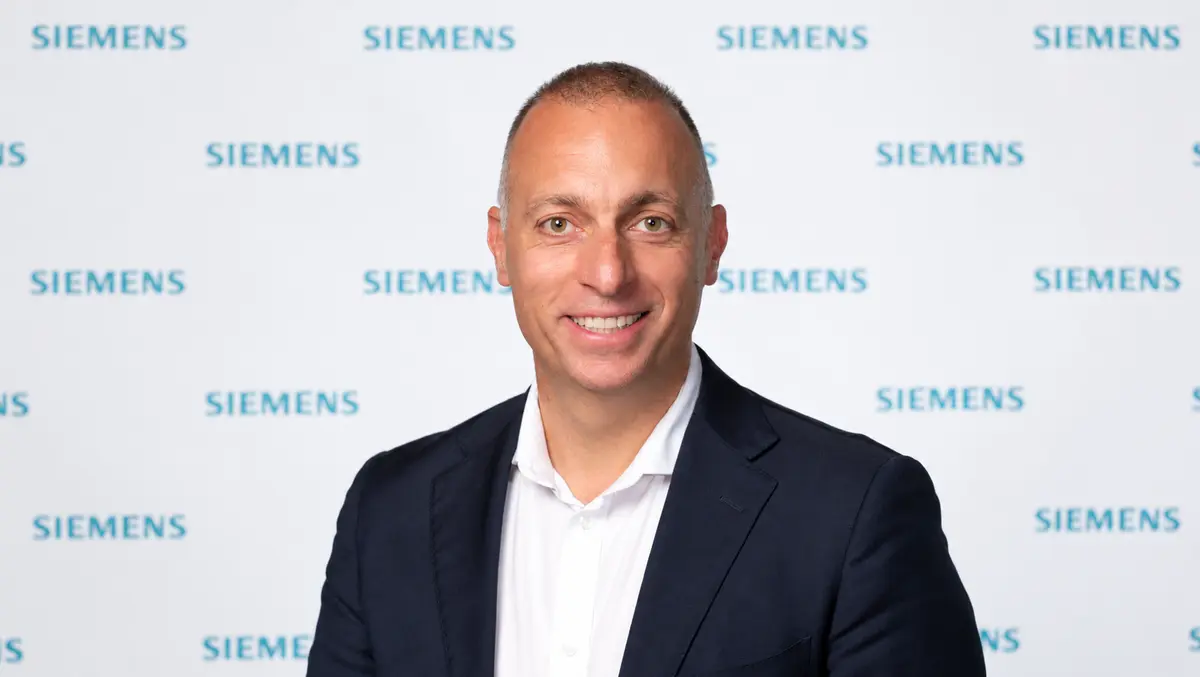
For New Zealand manufacturing businesses, that could make a meaningful difference. Darryl Kaufmann, Managing Director – Digital Industries, Siemens Australia and New Zealand, discusses how Industrial AI can help organisations apply their knowledge, strengthen decision-making and give skilled people more time to innovate.
What makes Industrial AI different from the AI most people already use?
Many people have encountered generative AI through tools that help them write, summarise information or answer questions. Industrial AI applies similar capabilities to the physical systems we depend on, from manufacturing plants and buildings to energy infrastructure and transport.
These aren't separate worlds – generative AI can be part of an industrial application, helping an engineer interact with complex information more easily, for example. The difference is the context and the demands placed on the technology.
An answer has to reflect the equipment, the process and the consequences of getting something wrong. That requires reliable data, deep industrial knowledge and appropriate validation. A convincing response alone isn't enough when a decision affects a real operating environment. Industrial AI is ultimately the combination of the real and digital worlds.
Why is this a particularly important opportunity for New Zealand?
New Zealand has considerable specialist expertise, often in relatively small teams. Businesses have always had to be resourceful, and many compete internationally through ingenuity, adaptability and a deep understanding of their markets.
Industrial AI offers a way to build on those strengths. If useful knowledge can reach more people across an organisation, teams can make better-informed decisions, complementing the work of specialists and giving them more room to innovate.
This is especially valuable when experienced people are stretched or particular skills are difficult to find. It also creates opportunities to develop the next generation of expertise. Helping someone understand how a problem was previously solved gives them a stronger starting point for tackling the next one.
For me, that's an important productivity and competitiveness opportunity for both New Zealand and Australia.
What does supporting human expertise look like in practice?
Think about the person everyone calls when a particular machine behaves unexpectedly: their experience is incredibly valuable. Capturing maintenance records, previous interventions and the reasoning behind them can help make that experience more useful to colleagues.
AI can help people find and interpret that information, but it still takes the involvement of those who understand the work. Knowledge doesn't become reliable simply because it's been put into a system.
There's also an opportunity to reduce the routine work that occupies skilled people. For example, we recently launched our Eigen Engineering Agent, which applies generative AI to automation engineering tasks to help cut repetitive work and autonomously execute engineering workflows.
The engineer still needs to understand and review the work, but Eigen provides contextual guidance and helps increase efficiency and capability.
What excites me is giving capable people more time to consider alternatives, solve difficult problems and improve the design.
What foundations do businesses need to turn that potential into better decisions?
They need information that is trustworthy, accessible and connected to the task. A design change, a production plan and a maintenance record each tell you something. Bringing them together gives you a much fuller picture.
That's the principle behind a digital thread: keeping information connected through design, manufacturing planning, production, logistics and service. It helps knowledge travel with a product or process throughout its lifecycle.
Rocket Lab is a great homegrown example of this. Its announced adoption of Siemens software in 2019 aimed to connect design, engineering and production systems as the business grew. Their connected digital foundation helps specialist teams work across locations, which has been significant to their growth.
Connected tools and services, including the AI-enablement of technologies they use, can support that foundation. The practical goal is to give people the relevant context when they need to act.
Where are businesses already seeing practical results?
In Australia, BlueScope is a great example of applying Industrial AI locally, then scaling best practice across its global operations. Its predictive maintenance program began with a pilot at Springhill Works in Port Kembla before expanding internationally. Using our Senseye Predictive Maintenance platform, it has reported avoiding more than 1,950 hours of machine downtime and 53 complete process stops globally.
The significance is what an earlier warning allows people to do. A maintenance team can investigate an emerging issue and plan an intervention before it becomes a disruptive failure. There's also value in sharing knowledge between teams, so experience gained at BlueScope in Australia can help inform decisions at their New Zealand plant.
These improvements can support sustainability too – avoiding process interruptions can reduce wasted material and unnecessary resource use. Productivity, resilience and environmental performance can improve together.
Where should smaller businesses begin, and what comes next?
Start with a recurring problem or a decision that is difficult today. It might involve equipment reliability, quality, energy use or the time spent finding technical information. Involve the people who understand it, identify the information they need and define what improvement would look like.
That approach is relevant for any size of business across any sector. You can begin with a focused application, learn from it and expand where the results justify it.
Looking ahead, AI will bring software and physical operations closer together, helping businesses respond more flexibly to changing production requirements, supply constraints and equipment conditions. Confidence will come from proving those capabilities in practice.
As we mark 150 years of Siemens in New Zealand with our Beyond 150 competition, it's the perfect moment to consider what comes next. I'm optimistic about how much more people could achieve when the knowledge within their organisations is easier to access, share and apply.