Gisborne kerbside collection review considers multiple wheelie bins
Wed, 30th Sep 2026
A new kerbside collection system is being considered for Gisborne to improve affordability, reduce illegal dumping and divert more waste from landfill.
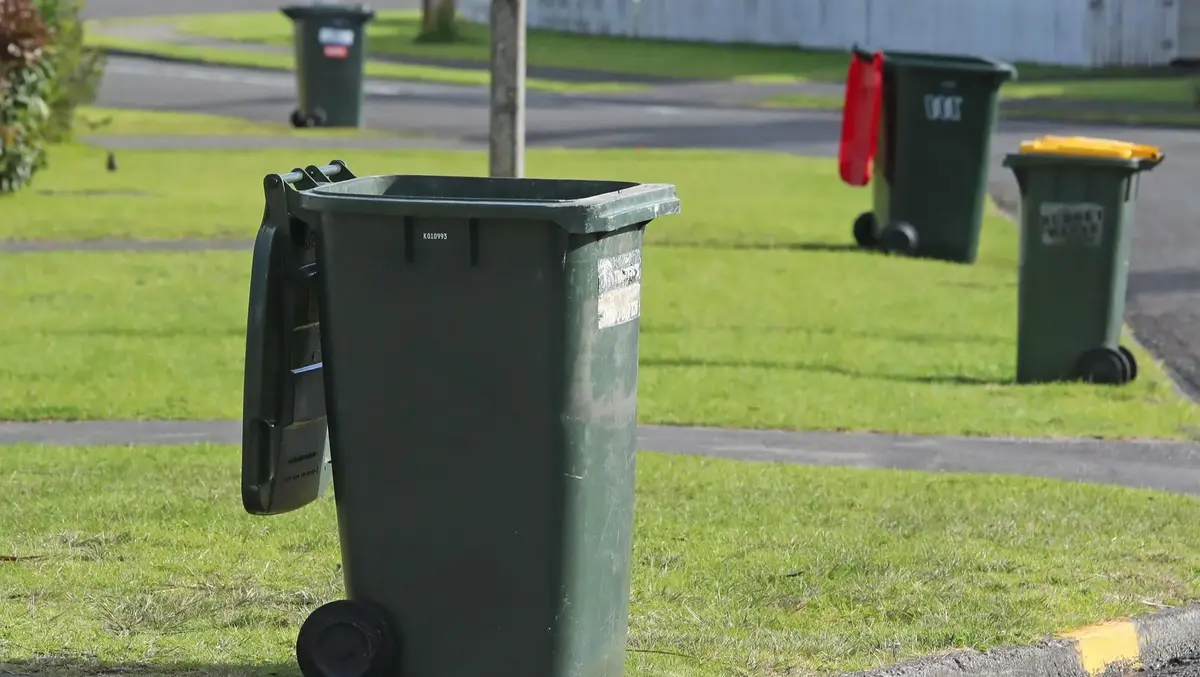
An ongoing review of Gisborne District Council's kerbside collection service could result in households sorting recycling and rubbish into a recycling bin and multiple wheelie bins.
This would replace the recycling bin and black bags for all household rubbish.
"Council's vision is to work towards a waste-free Tairāwhiti – a circular way of living where we prevent waste at the start, keep resources in use and return organics to the whenua, and also to design services that add real value to our communities, ensuring they are safe, respectful and fit for how people live," a spokesperson said.
The council hoped an easy-to-use collection service would prioritise reuse and recovery over disposal.
"This may influence behaviour change by encouraging households to place recyclables, food scraps and organics in the correct containers, rather than defaulting to the waste bin."
Food and organics collection could redirect food and organics waste to local processors so it could re-enter the local market, the spokesperson said.
Glass would be collected in containers, while mixed recycling, food scraps and organic waste, and general household rubbish would be collected in separate wheelie bins.
Options and service feasibility for the new system began this year as part of the wider Waste Minimisation and Management Plan (WMMP).
The review was ongoing and no final decisions had been made on buying containers or procuring collection services.
In 2022, the council received $7.21 million from Better Off Funding for projects, including cover of the initial wheelie bin and recycling bin costs to improve waste resilience.
"Depending on the selected configuration option, the cost of purchasing the kerbside containers is between $2.2m-$2.8m," the spokesperson said.
Rates would cover the initial purchase of containers, while households would pay for replacements or additional containers.
The collection service would be put to tender for external contractors.
"Council has conducted market engagement in August 2025 and January 2026, which demonstrated that there are capable suppliers that can provide appropriate vehicles, equipment and operational capability required for the wheelie bin collection."
The council could also consider wider network upgrades, including changes to collection routes and schedules, staffing and training, and trucks equipped with bin-lifting mechanisms.
The proposed changes are action 14 of 28 in the WMMP, which runs until 2032.
According to the plan, the system will keep valuable resources circulating while making reuse and recovery the easiest choice.
The review and implementation are scheduled to take place over the six-year plan period.
Local Democracy Reporting asked people in Gisborne what they thought of the changes.
Resident Nathan Beach said he occasionally saw rubbish dumped in public parks near his house.
He already had three recycling bins for separating bottles, cardboard and plastic, but did not believe households should produce more than one bag of rubbish a week.
Neena Clement said the current system was good, but believed the changes could help reduce the amount of waste dumped illegally or sent to landfill.
Gisborne resident Jill Cooper opposed the idea of wheelie bins.
Among other issues, she said they were an eyesore, could get smelly and were difficult for elderly people to manage.
"They don't get filled up, most of them are hardly half full, and you've got huge bins standing there, so I don't like wheelie bins, and I think the situation at the moment is excellent."
She was concerned people would cause issues with collection by incorrectly separating recycling or food waste.
She described the proposal as a "terrible waste of money" and instead suggested making larger recycling bins available on request.