Fate of rural Canterbury water supply on boil notice could be in community hands
Thu, 15th Oct 2026 (Today)
A small Mid Canterbury community which has been under a boil water notice for eight years has six months to finalise plans to run its own water scheme.
While Montalto residents explore managing the scheme themselves, Ashburton District Council has agreed to install endpoint treatment systems on the community's existing properties – but has delayed installing backflow prevention devices to avoid spending money on infrastructure that may need replacing in the event of a takeover.
Montalto, a rural community with a population of just under 100, has a combined stockwater and domestic water supply serving the 34 connected properties.
The community has been on a permanent boil water notice since 2018 due to poor-quality source water, an ageing UV treatment system, and a lack of filtration.
Only 10% of the water is used by the households and the rest is used for livestock, but as an Ashburton council drinking water supply, New Zealand drinking water regulator Taumata Arowai requires the scheme to comply with national standards.
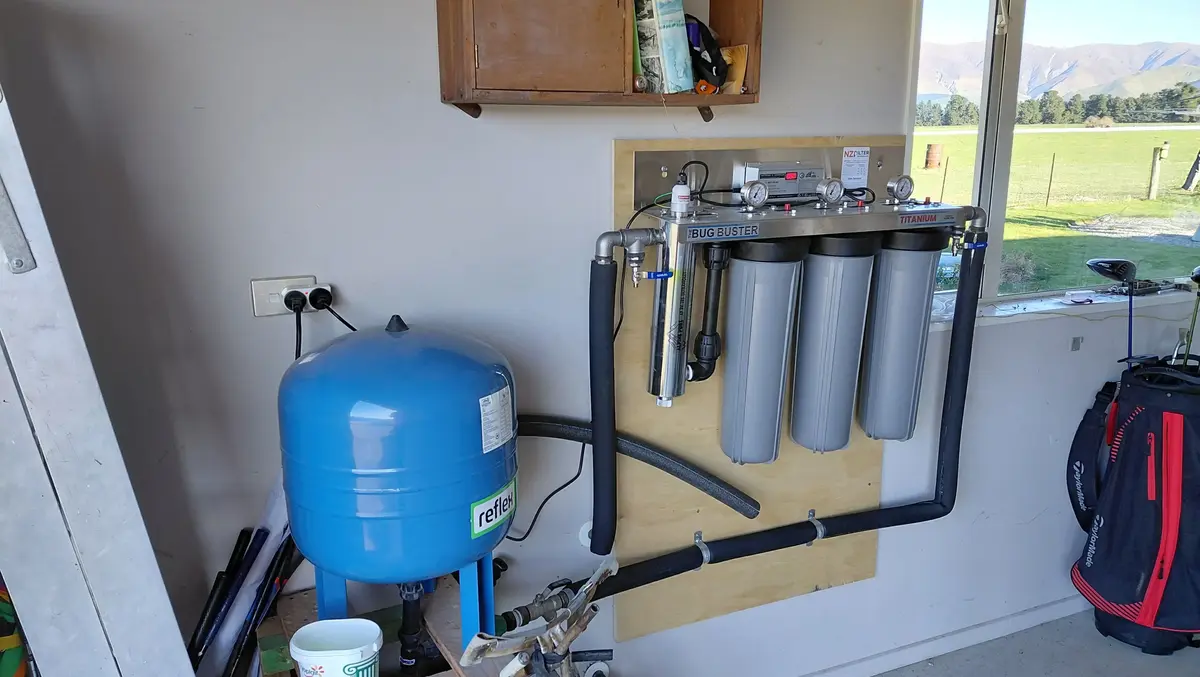
The council has been working with the community to find a suitable and affordable solution and, on Tuesday, voted to install Taumata Arowai-approved endpoint treatment systems.
The system also requires backflow devices to prevent possible contamination from any stockwater connection mixing back into the same pipes that also deliver drinking water.
Cr Deb Gilkison said there was a timing issue with the backflow devices, with plans for the community to potentially take over the scheme and install a new ring pipe system.
The council resolution on Tuesday gives Montalto residents until June 1 next year to produce a plan, or the council will proceed with the backflow meters in 2027/28.
Gilkison said if the takeover plan progresses, installing the backflow on the old pipes beforehand would be a complete waste of money, and successfully put forward an amendment to delay the installation.
"What we all want is the best long-term outcome, so let's give that extra six months to make sure that they've got the right option, that they will also be the ones funding."
In the recent community consultation, the council had proposed the scheme revert to a rainwater storage supply with the endpoint treatment systems, but that didn't fly with the majority of residents.
Building a new drinking water-only scheme with end-point treatment at each household was estimated to cost around $6.9m.
Several submitters supported the landowners forming an entity and taking over the scheme, but hadn't settled on exactly how to accomplish that and the best way forward to make it compliant.
The project has a $1.5m budget, which includes the now-delayed backflow device installation.
The cost would be loan-funded and paid off over time by the scheme's users.
The council will work with the Montalto community to establish an appropriate independent entity capable of operating the combined drinking and stock water scheme.
The complicating factor was that any transfer of the scheme to a new entity requires a referendum of the affected population and at least 50% support for the proposal.
Chief Executive Hamish Riach said the referendum is not just a quick survey but a prescribed legal process set out in legislation, which also includes that any entity needs to form before the referendum.
Riach said a similar process in Gore took two years.
Cr Richard Wilson was concerned the council solution was focused on sorting drinking water but didn't solve stockwater issues, which was a majority of the water use.
"It's a stockwater scheme that people drink off."
Riach said the council was the drinking water supplier and its "legal obligation is to be compliant", as judged by Taumata Arowai.
He said the council had been working with the regulator for years on a solution but "they are not going to walk with us forever and us not fix it".
"We have to advance from conversations to solutions and decisions."
Cr Phil Everest had some reservations that the council plans didn't take into account the overall picture, ignoring the fish screen non-compliance and the need to get clean water down a pipeline.
Taumata Arowai had requested on October 1 that the council provide "sufficient assurance that it has selected and committed to a credible pathway for achieving compliance" by November 27.
The water services authority will now consider if the council pathway is sufficient of if further action is appropriate, with the Water Services Act 2021 granting it powers to require suppliers to take action.