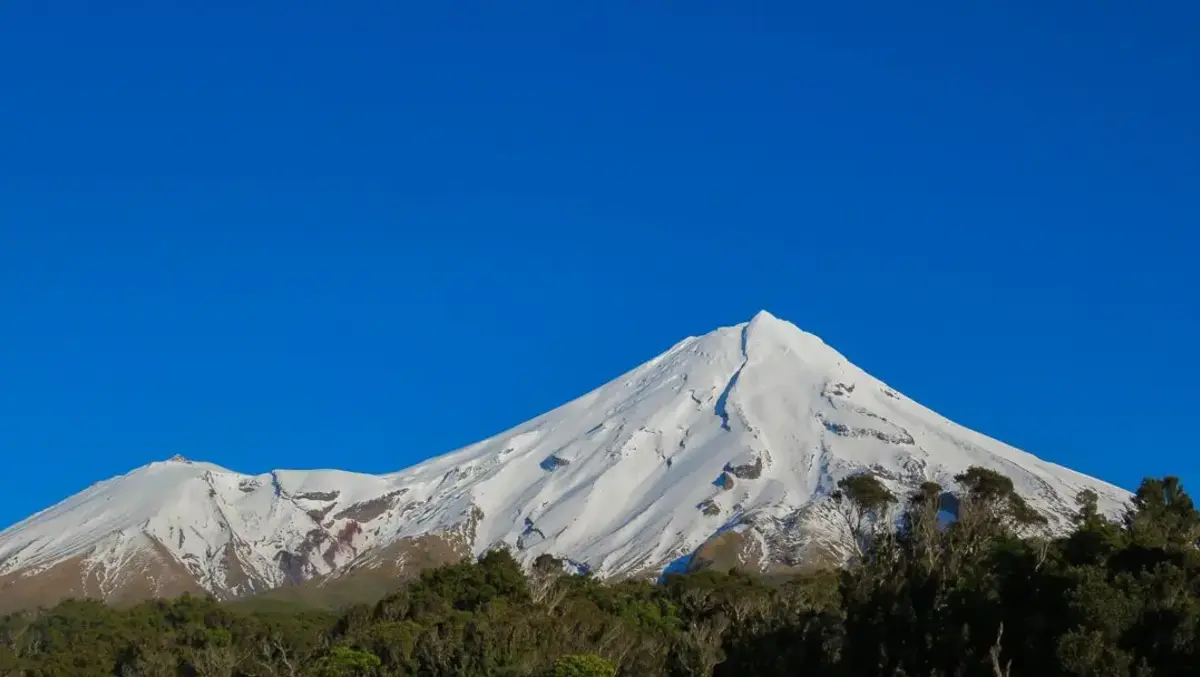
Council urges more detail on Taranaki Maunga plan
Wed, 4th Nov 2026 (Today)Taranaki's regional council wants more practical information, coordination and details of costs as a plan is drawn up to manage Taranaki Maunga.
The plan will set out how Te Papa-kura-o-Taranaki national park is protected, restored, accessed and used.
It's being created by Te Tōpuni Kōkōrangi, a management board set up by the 2025 redress law for the colonial confiscation of Taranaki Maunga.
Called He Kawa Ora mō Te Papa-kura-o-Taranaki, the plan's currently a blank page as Te Tōpuni Kōkōrangi has held a two-month public comment period before drafting begins.
In its comment, Taranaki Regional Council (TRC) said time was needed to "respectfully" meet and work out practical ways to protect the park's peaks and surrounding ancestral lands.
"The Council particularly recommends early and regular liaison between the He Kawa Ora planning team and the [TRC] regional spatial planning programme."
It called for talks on timeframes, evidence, mapping, engagement and areas where He Kawa Ora and regional planning could support each other.
The 2025 Taranaki Maunga Collective Redress Act recognised the park's peaks and surrounding ancestral lands as a legal person, Te Kāhui Tupua.
Farmer-lobby councillors have been worried about any practical implications of the law extending Te Kāhui Tupua's status beyond the park boundaries.
TRC said it wanted to continue its work on the maunga at a reasonable price – including monitoring of weather, flooding, volcanic and seismic risks.
"The Council would welcome a clear process for considering permissions, concessions, conditions and costs associated with such activities."
"Matters for discussion could include coordination of work programmes, information sharing, opportunities for complementary implementation and monitoring."
It's keen for early talks about biosecurity and biodiversity work, including pest management.
A Policy and Planning Committee workshop finalised the comment on He Kawa Ora, which was confirmed by a full council meeting on Tuesday.
Despite the call for more details, TRC's comment was largely positive about protection of the national park – and optimistic it could mesh with the council's regional planning.
"He Kawa Ora is being developed at the same time as significant resource management reform and early regional spatial planning work," said a staff paper about TRC's comment.
"This creates a risk of misalignment, but also an opportunity to connect conservation, cultural, environmental and regional planning outcomes."
In September TRC offered the expertise of council policy staff to assist in shaping He Kawa Ora.
In the public comment it further offered access to its data and know-how.
"The council holds hydrological, water quality, meteorological and catchment information that may assist plan development and implementation.
"The council is willing to discuss relevant information, its appropriate interpretation and known limitations."
The comment said any arrangement with Te Tōpuni Kōkōrangi should complement, rather than replace, participation by the eight iwi of Taranaki and TRC's Treaty settlement obligations.
With the public comment period now complete, He Kawa Ora will be drafted over summer.
Te Tōpuni Kōkōrangi held 55 meetings with people and groups interested in the future of the mountain.
The Department of Conservation and Te Tōpuni Kōkōrangi appointed planners Sean Zieltjes and Laura Buttimore to coordinate development of He Kawa Ora.
They've met with iwi and hapū, the region's tramping and climbing clubs, conservation groups, schools, service clubs, rangatahi and anyone else wanting a say in the new era of the former Egmont National Park.
The plan will be publicly notified in June and be up for formal public consultation and submissions.
The completed plan finally needs joint approval by the Minister of Conservation and the governance board Te Tōpuni Ngārahu, which has representatives from the eight iwi of Taranaki.