Ashburton councillor throws shadow of doubt on solar expansion
Thu, 5th Nov 2026 (Today)Ashburton's deputy mayor has cast a shadow over the council's potential solar energy expansion.
Ashburton District Council is working on its long-term budgets, and factoring into that is the increased cost of electricity,
It faced increased line charges this year and will need to go to the market for a new electricity contract next year, with the anticipation that rates will be higher.
Introducing solar power generation could be a way to offset those cost increases, but it comes with startup costs.
Cr Richard Wilson said it's about "what is cost effective to the ratepayer".
"We will need to weigh up if paying for power from the grid is going to be cheaper in the long run than paying for any solar investments to generate it."
He said it didn't make sense to invest in solar to reduce the council's carbon footprint as around 90% of New Zealand's power is already coming from renewable sources.
"The power we are buying is already renewable.
"If it's to offset power costs, we'll have to look at how that balances out between the investment and returns, or if we are better off spending that sort of money on our roads."
The cost of installing solar generation may be too hard to squeeze into a looming rates cap environment anyway, he said.
His comments come after a long-term plan (LTP) workshop last week focused on the council's climate change and sustainability strategy, and looking at emission reductions and energy efficiency.
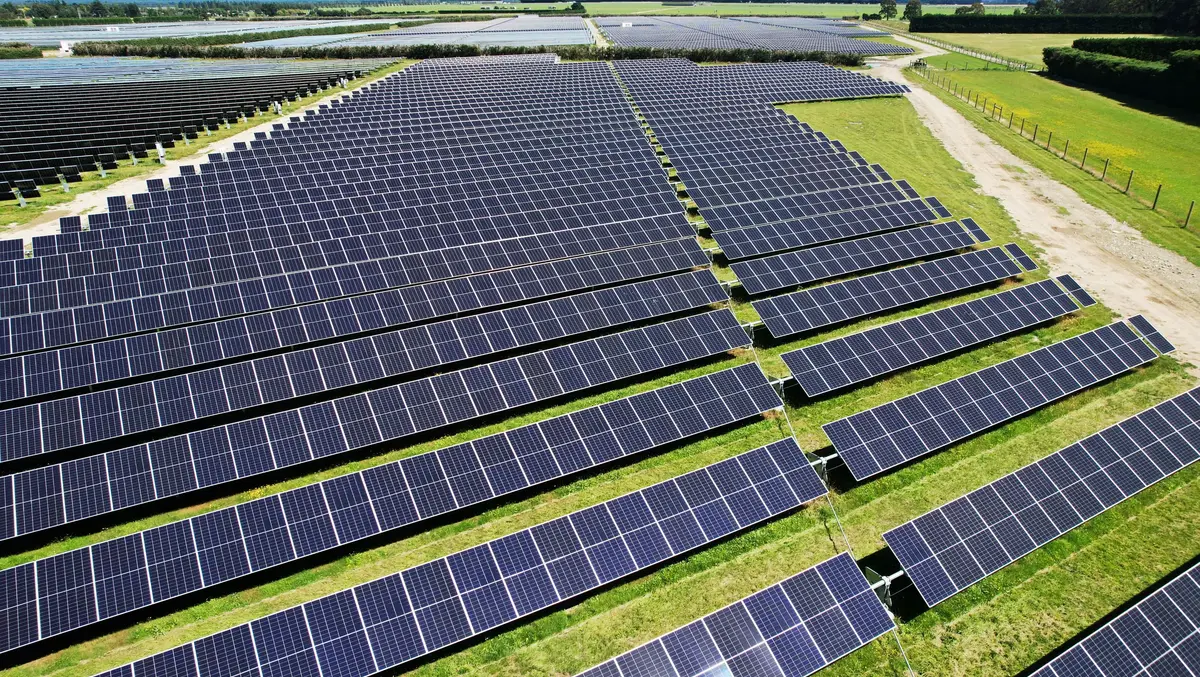
Electricity costs the council around $1.77m a year, and introducing solar power could reduce that by $400,000 per year, but setting up a solar farm to generate the power could cost over $5m.
Cr Phill Hooper thought that rather than the council investing in one solar farm for $5-6m, it could install panels on its buildings as options for "bite-size chunks of the elephant".
Chief executive Hamish Riach said that was a direction the council is wrestling with.
He said the council departments have put forward a number of solar proposals, and councillors will consider them and the financial implications in the budget process starting next week.
"We have struggled to leave them in the budget, mainly because the capital cost has to be paid up front and the savings accrue [over time]."
He said it will need a wider strategic overview of the various proposals.
The biggest activity that "either benefits or has to incur that cost is wastewater" and there is already pressure on three waters budgets from the changing environmental standards.
He said Te Whare Whakatere, Ashburton's library and civic centre, is wired for solar panels but there "are a range of issues" – including penetration of the roof, insurance, and pigeons to consider, Riach said.
The carpark area had ducting installed for EV charging, and setting them up in advance of expanding the number of EV vehicles would be considered in the LTP budgets, he said.
"At the moment, we are restricted to hybrids because we haven't got the charging facility for a full plug-in EV."
Wilson said the council doesn't need to rush a strategy to make its fleet cars EVs
"We're all going to be in hybrid cars anyway because you're not going to be able to buy anything else soon probably."
Another factor is LPG, which costs the council around $98,000 a year, predominantly at the EA Networks Centre to heat water for the aquatic facilities.
People and capability general manager Sarah Mosley said the budget will consider a proposal to remove LPG from EA Networks Centre, replacing it with greater electricity consumption.
The EA Networks Centre 30-year masterplan also includes a proposed solar farm, and work on developing it was scheduled to begin next year in the last LTP.
Mosley indicated it will not be in the budget for the next three years.
The council will consider obtaining independent expert advice to evaluate solar options to ensure any future investment aligns with long-term financial and environmental goals.
SUBHEAD: Selwyn secure solar funds
Selwyn District Council is expanding its solar energy provision after receiving $300,000 from the Energy Efficiency and Conservation Authority (EECA).
The $390,000 project, with the council's $90,000 contribution coming from reserves, will have panels installed on the Castle Hill Community Centre, Lincoln Library, and West Melton Community Centre.
Selwyn Mayor Lydia Gliddon told Local Democracy that the council's planning and climate change committee had discussed seeking the funding.
"It's a bit of a good news story of getting funding to try and offset costs and make some of our buildings more resilient".
As well as reducing energy costs, the panels provide increased resilience for civil emergency-type situations, she said.