With the average US waste-to-energy facility now 36 years old, well past its design life, managers face a critical question: invest in refurbishment or build new? A comprehensive SWANA study reveals surprising answers about costs, strategy and long-term value.
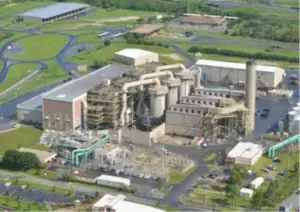
Pinellas County Waste to Energy plant
Getting old, though inevitable, isn’t something that is generally embraced with enthusiasm. There are aches and pains here and there. In general, life is becoming a little more strenuous. The same goes for ageing waste-to-energy plants: once a state-of-the-art facility with all the bells and whistles, now an oldie that still does the job but has lost both its lustre and effectiveness.
The typical service life of a WtE facility is estimated at 25 to 30 years. That’s not only when the CAPEX is paid off, but also when the infrastructure and technology show signs of wearing. And then what?
“You basically have two options: refurbish or rebuild,” says Jeremy O’Brien, Director of Applied Research at SWANA (The Solid Waste Association of North America). “There are valid points for both.” In their recent report “Aging Waste-to-Energy Facilities: Refurbish or Replace?” they examine this question in detail using case studies from Florida facilities.
The numbers underscore the urgency: the average age of the 63 operating waste-to-energy facilities in the US is 36 years. Nearly all have served their communities for more than 30 years – well past their original design life. This puts facility managers across the country at a critical decision point.
Understanding the cost structure
The financial implications are significant. Tipping fees were originally calculated on 20–25 year bond repayment periods, but as facilities continue operating beyond this timeframe, the true life cycle economics look different. “Once the bond has been paid off, the cost drops dramatically, by about 50 per cent,” O’Brien explains.
The data from the Florida case studies SWANA presents in its report reveal a striking cost differential. Refurbishment costs range from $101,000 to $106,000 per ton of daily capacity. Replacement costs range from $300,000 to over $615,000 per ton. In other words: refurbishment costs roughly one-third of what replacement does. But the question remains: does this cost advantage translate into competitive economics when compared to the alternative many operators are considering: simply landfilling waste?
>> Europe’s Waste-to-Energy sector embraces circular economy future
What drives the timeline?
Several factors determine when major investment decisions become necessary.
Boiler infrastructure: The most critical component is boiler tubing. In water wall incinerators, tubes lining the combustion chamber face extreme temperatures and corrosive conditions, wearing out over time at significant replacement cost.
Air pollution control systems: These represent a significant portion of facility costs. Changes in regulations – particularly regarding NOx emissions – can drive major capital investments regardless of mechanical condition.
Auxiliary systems: Cooling systems, feed systems and grapples all experience wear. “Anything can wear out,” O’Brien says. “Those are the major things that people start to look at.”
Regulatory compliance: New emission standards can make replacement more attractive than retrofitting, especially when space constraints prevent installation of advanced systems like selective catalytic reduction (SCR) for NOx control.
Operational considerations
The refurbishment process presents logistical challenges that shouldn’t be underestimated.
Some refurbishments require a complete facility shutdown, forcing operators to find alternative disposal capacity. This typically means increased landfilling during the refurbishment period: an operational and financial challenge that must be factored into project planning.
Replacement offers different challenges. Building a new facility on the same site means either operating the old facility until the new one comes online (requiring sufficient site area) or finding alternative disposal during construction. Palm Beach County is evaluating multiple site options for REF 3, including constructing it north of the existing REF 2 while REF 1 continues operating, then deconstructing REF 1 once REF 3 is operational.
>> All about EfW: ISWA White Book on Energy from Waste Technologies
The 50-year economic model
The SWANA report’s most significant contribution is its comprehensive 50-year financial analysis, combining initial construction, refurbishment and extended operations.
Using Palm Beach County’s REF 3 project as a model, the analysis assumes a facility built in 2035, refurbished in 2060 and operating through 2086. The projected tipping fee over this 50-year service life is $66.85 per ton (in 2025 dollars), with $46.34 representing capital costs and $20.50 representing net operating costs.
For context, the national average landfill tipping fee was $56.80 per ton in 2023. The gap is narrower than expected, particularly considering WtE’s additional benefits: volume reduction, energy generation and metals recovery.
“A lot of people say the tipping fees are too high compared to landfill disposal,” O’Brien says. “But the longer they last, you can charge a lower amount over the service life. That’s one of the most exciting things about this report. They can be economically competitive with landfill disposal over that timeframe.”
The strategic recommendation
Based on this analysis, SWANA offers a clear two-step framework:
Step One: Refurbish after 25–30 years
“I think it’s almost a no-brainer to do refurbishment,” O’Brien states. “You’ve already pretty much paid most of the facility off by the time the refurbishment question comes up. You paid off so much of the capital cost, and you don’t have to site a new facility.”
The economics are compelling. Refurbishment costs one-third of replacement while extending service life another 25 years. Facilities can often maintain operations during the work, minimising disruption to waste management systems.
Step Two: Replace after 50 years
After a facility has been refurbished and operated for approximately 50 years, replacement becomes the more logical choice.
“At 50 years, eventually the infrastructure itself – the roads in and out of the facility, the waste scales, the size of the tipping floor – these major infrastructures that don’t really have to be replaced early on, they would consider replacing those,” O’Brien explains.
At this point, even non-combustion infrastructure is ageing. Roads, scales, tipping floors, transfer systems and site utilities all need attention. The cumulative maintenance burden and the opportunity to implement newer technology make replacement more attractive.
“Hopefully if we built one now there will be a new technology in the next 50 years,” O’Brien adds. While alternative thermal treatment technologies like gasification and pyrolysis have not achieved commercial viability despite decades of development, future technological advances could change the equation.
When to deviate from the framework
Certain circumstances justify earlier replacement and understanding these exceptions is critical for facility managers evaluating their options.
- Regulatory compliance issues: If new emission standards cannot be met through retrofitting, replacement may be necessary. The EPA’s proposed 2024 standards for large WtE facilities would limit emissions of nine pollutants, with the NOx standard presenting the biggest challenge. Implementing SCR systems at existing facilities is generally not feasible due to space and technical constraints. Most US facilities use SNCR technology; retrofitting for SCR typically requires replacement.
- Technology transitions: Operational experience may favour different technology choices. Palm Beach County’s shift from RDF to mass burn reflects industry-wide preferences based on safety, efficiency and operational considerations.
- Site constraints: After 30-plus years, demographics and land use change. A facility originally sited in an industrial area may now be surrounded by residential development or may face environmental justice concerns. But the decision to relocate through replacement also depends heavily on regional landfill capacity.”There are certain parts of the US now that are definitely running out of landfill capacity,” O’Brien notes. “The northeastern US is really facing almost a crisis now.” For these communities, even modestly higher WtE tipping fees may be acceptable compared to the costs and risks of long-distance waste transport.
In contrast, areas with abundant low-cost landfill face different economics. “We’re about to run out of landfill capacity,” O’Brien notes about Mecklenburg County, NC. “The county manager doesn’t want to consider WtE due to tipping fee differentials. But that differential is disappearing.”
As landfill costs rise due to transportation distances, environmental requirements and capacity constraints, both refurbishment and replacement become more economically justified.
- Capacity needs: Population growth may require expanded capacity that cannot be accommodated through refurbishment alone. Palm Beach County’s decision to build REF 3 reflects anticipated population growth of 17% by 2050. Replacement offers the opportunity to right-size capacity for future needs while potentially relocating to a site closer to waste generation centres or transfer infrastructure.
Beyond simple cost comparison
While the economic analysis focuses on tipping fees, the refurbish-or-replace decision involves factors that don’t appear on simple cost spreadsheets but significantly impact long-term value.
- Volume reduction and landfill preservation: WtE facilities reduce waste disposal volume by 80–90%, dramatically extending landfill life. For Pinellas County, this benefit was central to their refurbishment decision, maximising decades of remaining landfill capacity. For municipalities facing landfill capacity constraints, this benefit alone can justify the investment in either refurbishment or replacement.
- Metals recovery: Beyond power sales, metal recovery adds revenue. Pinellas County recovers approximately 30,000 tons annually – more than through kerbside recycling programmes. Newer facilities often achieve higher recovery rates.
- Energy generation and revenue: Facilities provide reliable baseload power. Pinellas County generates 75 MW; Palm Beach’s REF 2 generates 100 MW. This renewable energy displaces fossil fuel generation while providing revenue through power purchase agreements. The value of this reliable, renewable power may increase as grid demands evolve, potentially improving the economics of both refurbishment and replacement decisions made today.
- Emerging contaminant destruction: “We’re finding problematic substances like household hazardous waste and PFAS in residual waste,” O’Brien says. “Combustion makes them inert – the better way to manage them environmentally.”O’Brien is particularly excited about designing next-generation replacement facilities to optimise PFAS destruction. This capability could become a determining factor in replacement decisions: not just matching current capacity but enhancing environmental performance beyond what refurbishment can achieve.
- Long-term control and security: For communities, WtE provides disposal security and keeps waste management revenues local. “Waste energy allows you to keep control over future capacity and future costs,” O’Brien emphasises. Both refurbishment and replacement maintain this control, while contracting for out-of-county landfill disposal creates vulnerability: contracts can expire or be terminated, leaving communities scrambling for alternatives. This strategic consideration often weighs heavily in favour of investing in existing WtE infrastructure rather than abandoning it.
Changing waste streams
One variable that affects both refurbishment and replacement planning is the evolution of waste streams, particularly as municipalities increase food waste diversion.
Facilities have operational flexibility to adjust to changing waste characteristics. The more significant question is designing next-generation facilities with anticipated waste streams in mind.
“As we consider some of the newer environmental issues like PFAS, microplastics and Covid waste and things like that – there are a lot of reasons to consider high-temperature processing,” he notes. These emerging challenges may actually strengthen the case for WtE technology and inform the specifications for replacement facilities when that 50-year mark arrives. Rather than undermining the economics of refurbishment, changing waste streams reinforce the value of maintaining thermal processing capacity through either investment path.
Looking ahead
The SWANA research provides facility managers with data-driven guidance at a critical juncture. With most US facilities well past their original design life, decisions made in the next decade will shape waste management infrastructure for the next half-century.
The report’s central finding – that refurbishment followed by eventual replacement provides the optimal economic path – offers a clear strategic framework. But it also reveals a larger truth: WtE facilities, when properly maintained and upgraded, can serve communities far longer than originally anticipated, and at costs more competitive with landfilling than previously understood.
“These waste energy plants can service communities for a much longer time than we had thought and do it economically,” O’Brien concludes. “You keep all those revenues in town, and it makes that community secure for its waste disposal for that timeframe, whereas landfills are always filling up.”
For an industry facing environmental challenges, shrinking landfill capacity and increasing scrutiny of emerging contaminants, the message carries weight. The 63 ageing facilities across America represent long-term assets that can continue delivering value for decades.
The question isn’t whether these facilities are getting old. It’s whether facility managers will make the strategic investments to maximise their potential. The SWANA research suggests that with refurbishment at 25–30 years and replacement after 50, they can and should.